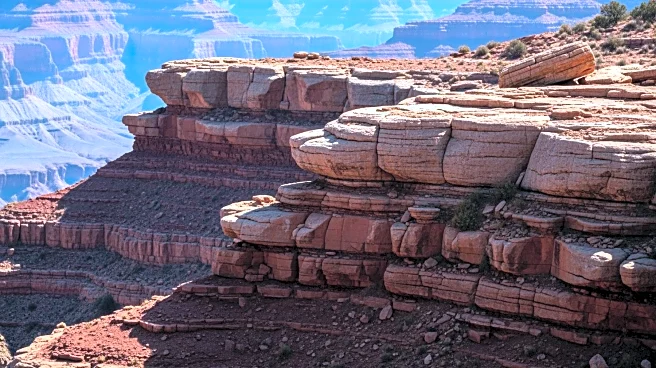

Grand Canyon National Park is not only a visual spectacle but also a geological marvel. The park's geology is a testament to the Earth's dynamic history, showcasing nearly 40 sedimentary rock layers that
span millions of years. These formations offer a glimpse into the planet's past, revealing the processes that have shaped the landscape over time. This article explores the geological wonders of Grand Canyon National Park, highlighting the unique features and formations that make it a natural treasure.
The Formation of the Grand Canyon
The Grand Canyon's formation is a result of millions of years of geological activity. The Colorado River, which flows through the canyon, played a significant role in its creation. Over time, the river carved its way through the rock layers, exposing the ancient geological history of the region. The canyon's depth and complexity are a testament to the power of erosion and the relentless force of water.
The rock layers within the canyon range from 200 million to nearly 2 billion years old. These layers were deposited in various environments, including shallow seas and ancient deserts. The oldest rocks, known as the Vishnu Basement Rocks, are found at the bottom of the canyon and date back nearly 2 billion years. These ancient formations provide valuable insights into the Earth's early history and the processes that have shaped the planet.
Sedimentary Layers and Unconformities
The Grand Canyon is renowned for its nearly 40 major sedimentary rock layers, each telling a unique story of the past. These layers include limestone, sandstone, and shale, which were deposited in different environments over millions of years. The canyon's rock formations are a record of changing climates, sea levels, and geological events.
One of the most intriguing aspects of the canyon's geology is the presence of unconformities. These gaps in the geological record represent periods of erosion or non-deposition, where rock layers were removed or never formed. The Great Unconformity, for example, is a significant gap that spans hundreds of millions of years, highlighting the dynamic nature of the Earth's surface.
Ongoing Geological Processes
The Grand Canyon is not a static landscape; it continues to evolve due to ongoing geological processes. Erosion, weathering, and tectonic activity continue to shape the canyon, altering its features over time. The park's unique climate, with its arid conditions and occasional flash floods, contributes to the ongoing erosion of the rock layers.
Volcanic activity has also played a role in the canyon's geological history. Lava flows from nearby volcanic fields have occasionally dammed the Colorado River, creating temporary lakes and altering the landscape. These events are a reminder of the ever-changing nature of the Earth's surface and the forces that continue to shape the Grand Canyon.
The geological wonders of Grand Canyon National Park offer a fascinating glimpse into the Earth's history. From ancient rock layers to ongoing geological processes, the park is a living testament to the dynamic nature of our planet. Exploring the canyon's geology provides a deeper understanding of the natural world and the forces that have shaped it over millions of years.