





The M65 atomic cannon, often referred to as "Atomic Annie," was a significant development in military technology during the early years of the Cold War. Designed to fire nuclear shells, this artillery piece represented a unique blend of traditional artillery and nuclear capability. Developed in the early 1950s, the M65 was a product of its time, reflecting the intense military and technological competition between superpowers.
Origins and Design
The origins of the M65
atomic cannon can be traced back to 1949 when the Picatinny Arsenal was tasked with creating a nuclear-capable artillery piece. Engineer Robert Schwartz played a pivotal role in its design, scaling up the existing 240 mm howitzer shell to 280 mm. The design took inspiration from the German K5 railroad gun, which had been used during World War II. The Pentagon approved the design, largely due to the influence of Samuel Feltman, a key figure in the ordnance department's research and development division.
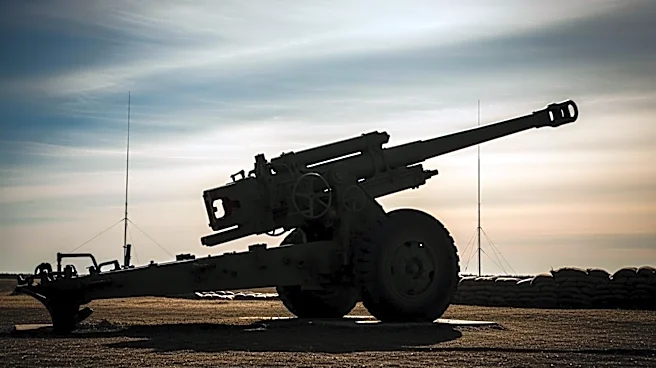
The M65 was a massive piece of artillery, weighing over 83 tons and measuring 84 feet in length. It required two specially designed tractors for transportation, which could independently steer and achieve speeds of up to 35 miles per hour. The cannon could be set up for firing in about 12 minutes and returned to traveling configuration in 15 minutes. This mobility was crucial for its deployment in various strategic locations.
Testing and Deployment
The M65 atomic cannon was first tested on May 25, 1953, at the Nevada Test Site as part of the Upshot-Knothole series of nuclear tests. The test, codenamed "Grable," was a success, with the cannon firing a 15-kiloton nuclear shell over a distance of seven miles. This test marked the first and only time a nuclear shell was fired from a cannon, showcasing the M65's unique capabilities.
Following the successful test, at least 20 M65 cannons were manufactured at Watervliet and Watertown Arsenals. These cannons were deployed in strategic locations, including West Germany, South Korea, and Okinawa, Japan. Their presence was intended to deter potential aggression from adversaries during the Cold War.
Obsolescence and Legacy
Despite its initial success, the M65 atomic cannon quickly became obsolete. The development of nuclear shells compatible with existing artillery pieces and the advent of rocket- and missile-based nuclear artillery reduced the need for such a specialized weapon. By 1963, the M65 was retired, replaced by more versatile and efficient systems.
However, the M65 remains a symbol of Cold War military innovation. Its development and deployment highlight the era's technological advancements and the strategic importance of nuclear deterrence. Today, several M65 cannons are preserved in museums, serving as reminders of a unique chapter in military history.