






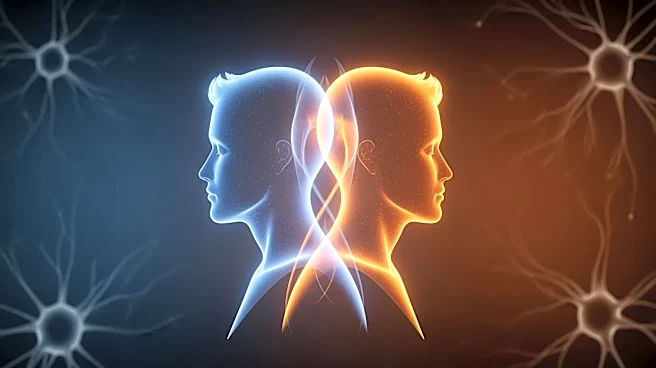


Control theory in psychology has evolved significantly over the years, providing insights into how individuals regulate their behavior and emotions. This theory, which includes concepts like self-control and the illusion of control, has been linked to various behaviors, including criminal activity. Understanding the historical development of control theory in psychology helps us appreciate its current applications and implications.
Early Foundations
The roots of control
theory in psychology can be traced back to the early 20th century. Sigmund Freud laid the groundwork with his concepts of the pleasure principle and reality principle. These principles describe the human tendency to seek immediate gratification and the learned ability to delay gratification due to life's realities. Freud's ideas set the stage for later developments in understanding self-control and its impact on behavior.
As psychology evolved, researchers began to explore the notion of self-control more deeply. The idea that individuals could regulate their impulses and delay gratification became a central theme in psychological studies. This focus on self-control laid the foundation for the development of control theory as a framework for understanding human behavior.
The Emergence of Self-Control Theory
In the late 20th century, criminologists Travis Hirschi and Michael Gottfredson introduced the self-control theory of crime, also known as the general theory of crime. This theory posits that a lack of self-control is a significant factor behind criminal behavior. According to Hirschi and Gottfredson, individuals who experience ineffective parenting before the age of ten are more likely to develop low self-control, leading to impulsive and criminal conduct.
The self-control theory of crime marked a significant milestone in the application of control theory to psychology. It provided a framework for understanding the relationship between self-control and criminal behavior, emphasizing the importance of early childhood experiences in shaping an individual's ability to regulate their actions.
Modern Applications and Implications
Today, control theory in psychology continues to influence various fields, including behavioral sciences and criminology. The concept of self-control is widely studied in relation to impulsive behaviors, addiction, and mental health. Researchers have found that low levels of self-control are correlated with a range of negative outcomes, highlighting the importance of developing self-regulation skills.
The illusion of control, another aspect of control theory, explores how individuals overestimate their ability to control events. This concept has implications for understanding gambling behavior and belief in the paranormal. By examining how people perceive control, psychologists can better understand decision-making processes and the factors that influence behavior.
Control theory in psychology has come a long way since its early foundations. Its evolution reflects a growing understanding of the complex interplay between self-control, behavior, and environmental influences. As research continues, control theory will likely remain a vital framework for exploring human behavior and its underlying mechanisms.