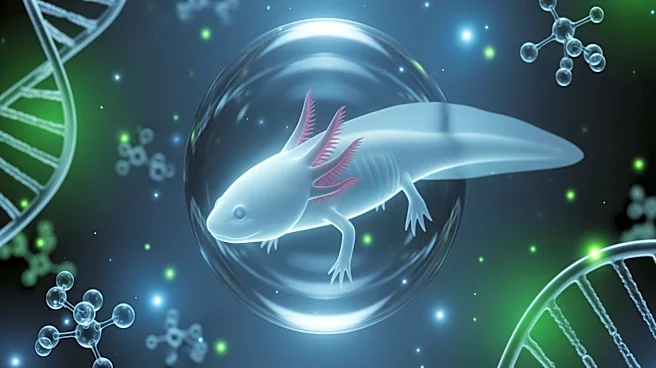








The axolotl, a unique amphibian native to Mexico, has become a valuable model organism in scientific research. Its remarkable ability to regenerate lost body parts and its neotenic nature make it an ideal subject for studies in developmental biology, genetics, and regenerative medicine. This article examines the role of the axolotl in scientific research and the insights it provides into regeneration and genetic processes.
Regeneration and Developmental Biology
The axolotl's ability to
regenerate entire limbs, tails, and even parts of its heart and brain has made it a focal point in the study of regenerative biology. Unlike most animals, which heal wounds with scar tissue, axolotls can regrow lost body parts with full functionality. This process begins with the formation of a blastema, a mass of cells capable of growth and regeneration, which then differentiates into the various tissues needed to reconstruct the lost body part.
Researchers are particularly interested in the axolotl's ability to regenerate nerve tissue, as this could have significant implications for human medicine. By studying the cellular and molecular mechanisms underlying axolotl regeneration, scientists hope to uncover new ways to promote tissue repair and regeneration in humans, potentially leading to breakthroughs in treating injuries and degenerative diseases.
Genetic Research and the Axolotl Genome
The axolotl's genome is one of the largest ever sequenced, containing 32 billion base pairs, which is about ten times the size of the human genome. This vast genetic material includes specific pathways that are believed to be responsible for the axolotl's regenerative abilities. The axolotl lacks the Pax3 gene, which is present in other salamanders, and instead relies on Pax7 to perform similar functions.
Understanding the genetic factors that contribute to the axolotl's unique traits could provide valuable insights into the genetic basis of regeneration and development. By studying the axolotl genome, researchers aim to identify the genes and pathways involved in these processes, which could inform the development of new therapies for human diseases and injuries.
The Axolotl as a Model Organism
In addition to its regenerative abilities, the axolotl is used as a model organism in various fields of research. Its large and easily manipulated embryos make it an ideal subject for studies in developmental biology, allowing scientists to observe the full development of a vertebrate. The axolotl is also used in heart defect studies due to the presence of a mutant gene that causes heart failure in embryos.
The axolotl's unique characteristics and ease of breeding in captivity have made it a popular subject in scientific research. By studying this remarkable creature, researchers hope to unlock the secrets of regeneration and development, paving the way for new medical advancements and a deeper understanding of the genetic and cellular processes that govern life.
In conclusion, the axolotl's role as a model organism in scientific research has provided valuable insights into regeneration, genetics, and developmental biology. Its unique traits continue to inspire researchers and hold promise for future breakthroughs in medicine and biology.