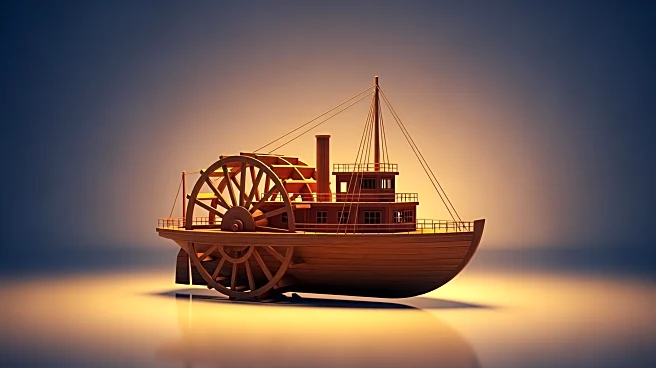




John Fitch, an American inventor born in 1743, is best known for his groundbreaking work in developing the first steamboat service in the United States. His invention marked a significant turning point in transportation technology, paving the way for future advancements in steam-powered vessels. This article explores the development of Fitch's steamboat and its lasting impact on the transportation industry.
The Birth of the Steamboat
In the mid-1780s, John Fitch settled in Warminster,
Pennsylvania, where he began to focus on his vision of creating a steam-powered boat. Inspired by the potential of steam engines, Fitch aimed to revolutionize transportation by harnessing steam power to navigate the inland waterways of the United States. Despite facing financial challenges, Fitch was determined to bring his vision to life.
Fitch's first successful trial run of his steamboat, Perseverance, took place on the Delaware River in 1787. The event was witnessed by delegates from the Constitutional Convention, highlighting the significance of his invention. The steamboat was propelled by a bank of oars on either side, powered by a steam engine. This innovative design allowed the vessel to carry passengers and goods more efficiently than traditional methods.
Challenges and Achievements
While Fitch's steamboat was mechanically successful, he faced numerous challenges in bringing his invention to market. A patent dispute with fellow inventor James Rumsey, who had also developed a steam-powered boat, complicated Fitch's efforts. The newly established federal Patent Commission awarded patents to both Fitch and Rumsey on the same day, leading to the loss of a monopoly that Fitch had hoped to secure.
Despite these setbacks, Fitch managed to operate a steamboat service between Philadelphia and Burlington, New Jersey, in 1790. His vessel carried up to 30 paying passengers on numerous round-trip voyages, demonstrating the practical application of steam-powered transportation. However, financial difficulties and the withdrawal of investor support ultimately hindered Fitch's ability to sustain his venture.
Lasting Impact
Although John Fitch's steamboat service was not commercially successful during his lifetime, his pioneering work laid the foundation for future advancements in steam-powered transportation. Two decades later, Robert Fulton would build upon Fitch's ideas to create a profitable steamboat enterprise, revolutionizing travel and trade in the United States.
Fitch's contributions to transportation technology were significant, and his legacy as a pioneer of steam-powered vessels endures. His work not only advanced the development of steamboats but also influenced the broader field of transportation, shaping the way people and goods moved across the country.