





Zinc oxide plays a crucial role in the development of modern display technologies, particularly through its use in indium gallium zinc oxide (IGZO) semiconductors. These semiconductors are integral to enhancing the performance and efficiency of various display devices. This article delves into the unique properties of IGZO, its applications in display technologies, and the advantages it offers over traditional materials.
Understanding IGZO Semiconductors
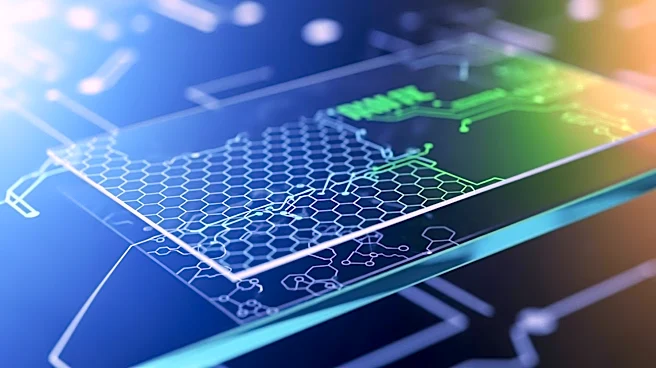
Indium gallium zinc oxide (IGZO) is a semiconducting material composed of indium, gallium, zinc, and oxygen. It is known for its unique atomic arrangement, which ensures stable performance. IGZO can exist in various compositions, typically with cation ratios of 1:1:1 or 2:2:1 for indium, gallium, and zinc, respectively. This structure enhances picture resolution and supports compatibility with diverse display technologies, making it a preferred choice for high-performance displays.In its amorphous form, known
as a-IGZO, it is a representative of transparent amorphous oxide semiconductors (TAOS). These semiconductors combine optical transparency with electron transport capabilities, making them suitable for thin-film transistors used in display applications. The high electron mobility of IGZO, which is 20-50 times greater than that of amorphous silicon, facilitates the miniaturization of transistors and the thinning of circuits, allowing for greater light transmission per pixel.
Applications in Display Technologies
IGZO is widely used in thin-film transistors (TFT) for display applications, such as in the TFT backplane of flat-panel displays (FPDs). The development of IGZO-TFT was pioneered by Hideo Hosono's group at the Tokyo Institute of Technology and Japan Science and Technology Agency in the early 2000s. Due to its high electron mobility, IGZO-TFT can improve the speed, resolution, and size of flat-panel displays, making it an ideal choice for organic light-emitting diode (OLED) TV displays.Sharp was the first company to start production of LCD panels incorporating IGZO-TFT in 2012. These panels are used in smartphones, tablets, and high-resolution LCDs, offering improved aperture ratios and reduced power consumption. The technology is also employed in ultrabook PCs and OLED TVs, showcasing its versatility and effectiveness in enhancing display quality.
Advantages Over Traditional Materials
One of the significant advantages of IGZO over traditional materials like amorphous silicon is its low power consumption. Unlike conventional screens that require continuous pixel driving, IGZO retains image information without refreshing, reducing power consumption significantly. This feature extends the battery life of portable devices, making IGZO a more sustainable and efficient choice for modern displays.Additionally, IGZO's ability to be deposited as a uniform amorphous phase while retaining high carrier mobility makes it a cost-effective and practical alternative to polycrystalline silicon. This uniformity ensures greater quality and reliability in display applications, further solidifying IGZO's role in advancing display technologies.