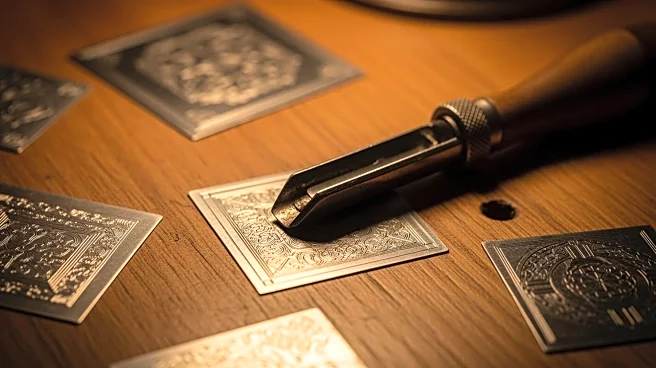



William Kneass was a prominent figure in the world of coin engraving, serving as the second Chief Engraver of the United States Mint from 1824 until his death in 1840. His work left a lasting impact on American currency, particularly through his designs of the "Classic Head" and modifications to the "Capped Bust" motif. This article delves into Kneass's life, his contributions to coin design, and his enduring legacy.
Early Life and Career
William Kneass was born on September
25, 1780, in Lancaster, Pennsylvania. He was the son of Christopher Kneass and Anna Justina Feltman. Kneass's early career was marked by his involvement in the War of 1812, where he served as a volunteer with the field engineers, contributing to the construction of fortifications in Philadelphia. This experience likely honed his skills in precision and design, which would later be crucial in his engraving work.
Before his appointment at the U.S. Mint, Kneass established his own engraving company in Philadelphia in 1804. His company became a hub for cultural figures, and Kneass himself was known for his line engravings and aquatints. He also partnered in other engraving firms, such as Young & Kneass & Co and Kneass & Dellaker, further solidifying his reputation in the field.
Contributions to the U.S. Mint
Kneass's tenure as Chief Engraver of the U.S. Mint began on January 29, 1824, following the death of Robert Scot. During his time at the Mint, Kneass was responsible for redesigning several denominations of American currency. His "Classic Head" design appeared on gold coins like the quarter eagle and half eagle from 1834 to 1839. Additionally, he modified John Reich's "Capped Bust" design for coins ranging from the half dime to the half dollar between 1829 and 1837.
One of Kneass's significant contributions was the introduction of a collar that standardized the diameter of coins, preventing them from expanding during minting. This innovation was crucial in maintaining the consistency and quality of U.S. coinage.
Personal Life and Legacy
William Kneass was married twice, first to Mary Turner Honeyman, with whom he had three children, and later to Jane Kramer, with whom he had another daughter. His children, Samuel Honeyman Kneass and Strickland Kneass, became notable civil engineers in Philadelphia, continuing the family's legacy of excellence.
Kneass suffered a stroke in 1835, which left him paralyzed on his right side. Despite this setback, his influence on coin design persisted, with Christian Gobrecht taking over many of his duties until Kneass's death on August 27, 1840. Kneass was remembered as a gentleman of the old school, admired for his ability to engage and win the esteem of children and youth.
William Kneass's contributions to the U.S. Mint and his innovative designs have left a lasting mark on American currency, ensuring his place in the annals of numismatic history.