
Apollo 15 stands out as a pivotal mission in the history of lunar exploration. Launched on July 26, 1971, it was the ninth crewed mission in the Apollo program and marked the fourth successful Moon landing.
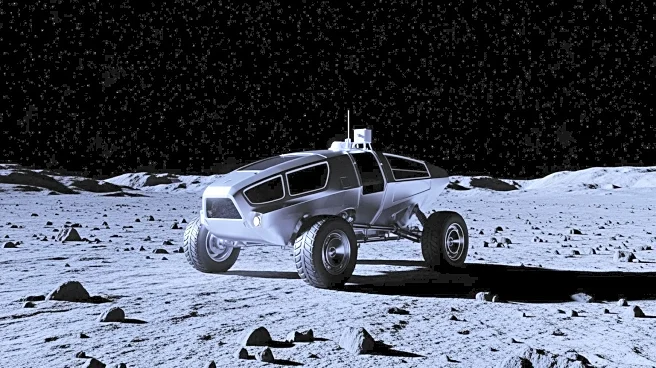
This mission was notable for its scientific focus and the introduction of the Lunar Roving Vehicle, which allowed astronauts to explore the lunar surface more extensively than ever before. Commanded by David Scott, with Alfred Worden as the command module pilot and James Irwin as the lunar module pilot, Apollo 15 achieved several milestones and faced its share of controversies.
Mission Objectives and Achievements
Apollo 15 was the first of the J missions, which were designed to extend the duration of lunar surface exploration and enhance scientific research. The mission's primary objectives included selenological inspection, survey, and sampling of materials and surface features in the Hadley-Apennine region. The crew was tasked with deploying and activating surface experiments, evaluating the capability of Apollo equipment for extended lunar stays, and conducting inflight experiments and photographic tasks from lunar orbit.
The mission achieved all its objectives, with Scott and Irwin spending over 18 hours on the lunar surface during three extravehicular activities (EVAs). They collected approximately 170 pounds of lunar samples, including the Genesis Rock, believed to be part of the Moon's early crust. The use of the Lunar Roving Vehicle allowed the astronauts to travel further from the lunar module than in previous missions, significantly enhancing their ability to conduct scientific research.
While Scott and Irwin explored the lunar surface, Worden orbited the Moon in the command module Endeavour, operating the scientific instrument module (SIM) bay. This suite of instruments collected valuable data on the Moon and its environment, contributing to a greater understanding of lunar geology.
Controversies and Challenges
Despite its successes, Apollo 15 was not without controversy. Before the mission, the crew had agreed to carry unauthorized postal covers to the Moon in exchange for financial compensation. This arrangement, made with a West German stamp dealer, led to a scandal when the covers were sold, and the astronauts were reprimanded by NASA. The incident tarnished the crew's reputations, and none of them flew in space again.
Another controversy arose from the Fallen Astronaut memorial left on the Moon by Scott. The small aluminum statuette, intended to honor astronauts and cosmonauts who had died in the pursuit of space exploration, was left without NASA's prior approval. The artist, Paul Van Hoeydonck, later claimed he had been promised recognition and the right to sell replicas, leading to further disputes.
These controversies, while significant, did not overshadow the mission's scientific achievements. Apollo 15's contributions to lunar exploration and its role in advancing human understanding of the Moon remain its lasting legacy.
Legacy and Impact
Apollo 15's impact on lunar exploration is profound. The mission demonstrated the effectiveness of the Lunar Roving Vehicle, which became a standard feature in subsequent Apollo missions. The scientific data collected during the mission provided valuable insights into the Moon's geology and history, influencing future lunar exploration efforts.
The mission also highlighted the importance of thorough planning and adherence to protocols, as evidenced by the controversies that arose. These lessons informed NASA's approach to subsequent missions and underscored the need for transparency and accountability in space exploration.
Apollo 15's legacy extends beyond its scientific contributions. The mission inspired a generation of scientists, engineers, and space enthusiasts, reinforcing the value of exploration and discovery. As one of the most ambitious lunar missions of its time, Apollo 15 set a high standard for future endeavors and remains a testament to human ingenuity and determination.
In conclusion, Apollo 15 was a landmark mission that advanced our understanding of the Moon and set the stage for future exploration. Its achievements and challenges continue to resonate, reminding us of the complexities and rewards of venturing beyond our planet.