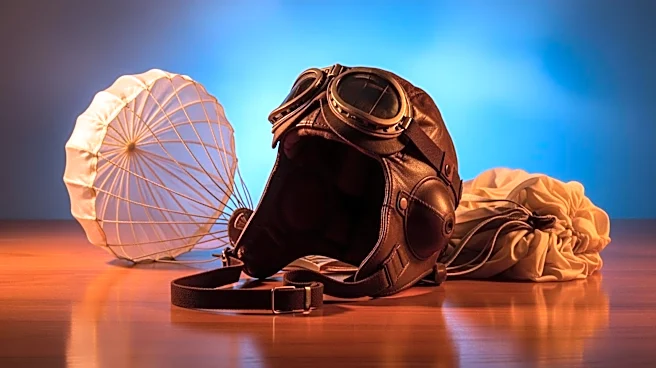







Leslie L. Irvin was a trailblazer in the field of parachuting, known for his daring stunts and groundbreaking inventions. Born in Los Angeles in 1895, Irvin's adventurous spirit led him to become a stuntman in the early Californian film industry. His work with parachutes not only revolutionized safety in aviation but also laid the foundation for modern parachuting techniques. This article explores Irvin's life, his key innovations, and the lasting
impact of his work.
Early Life and Career
Leslie L. Irvin was born on September 10, 1895, in Los Angeles, California. From a young age, he was drawn to adventure and athletics, which naturally led him to the burgeoning film industry in California. As a stuntman, Irvin performed trapeze acrobatics and parachute descents from balloons, showcasing his fearless nature. His first significant leap into the world of parachuting came in 1914 when he jumped from an airplane at 1,000 feet for the film "Sky High."
Irvin's early career was marked by his collaboration with Charles Broadwick, a pioneer in parachuting. Under Broadwick's mentorship, Irvin honed his skills and developed a passion for parachute design. His work with the Curtiss Aeroplane Company in Buffalo further solidified his reputation as an innovator. It was here that he developed a 32-foot diameter free-fall parachute, which he tested extensively before applying for a U.S. patent.
Innovations in Parachuting
Irvin's most significant contribution to parachuting came in 1918 when he developed a life-saving static line parachute. This invention was a game-changer for aviation safety, as it allowed for more reliable and controlled parachute deployments. Irvin's work caught the attention of the U.S. Army, and he soon joined the Army Air Service's parachute research team at McCook Field near Dayton, Ohio.
On April 28, 1919, Irvin made history by performing the first premeditated free-fall jump with a modern parachute. This jump, using the "Type A" parachute, marked a pivotal moment in parachuting history. The Type A parachute incorporated several key elements, including a ripcord for manual deployment and a pilot chute to draw the main canopy from the pack. These innovations set the standard for future parachute designs.
Legacy and Impact
Following his groundbreaking jump, Irvin founded the Irving Air Chute Company in Buffalo, New York. Despite a clerical error that added a 'g' to the company's name, it became the world's first parachute designer and manufacturer. The company played a crucial role in advancing parachute technology and safety standards.
Irvin's legacy extends beyond his inventions. He established the Caterpillar Club, awarding gold pins to pilots who successfully bailed out of disabled aircraft using an Irving parachute. By the end of World War II, over 34,000 people had received these pins, a testament to the life-saving impact of Irvin's work. Today, the successor to Irvin's company continues to innovate in the aerospace and military markets, ensuring that his pioneering spirit lives on.