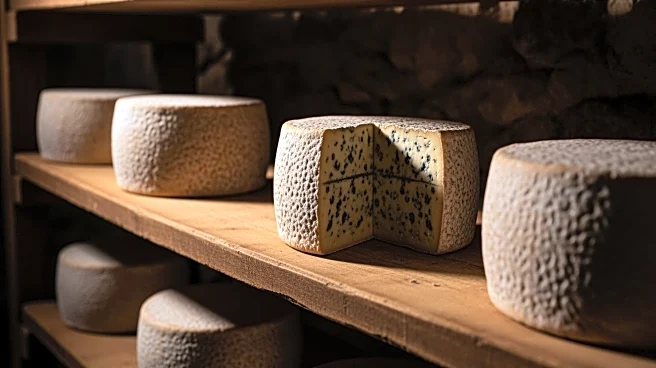

Roquefort cheese is not only famous for its taste but also for its unique production process. This article explores the meticulous methods and strict regulations that define the creation of Roquefort cheese,
ensuring its quality and authenticity.
Traditional Methods
Roquefort cheese is made exclusively from the milk of the Lacaune breed of sheep. This specificity is crucial to maintaining the cheese's distinct flavor profile. Prior to the Appellation d'Origine Contrôlée (AOC) regulations of 1925, small amounts of cow's or goat's milk were sometimes added, but today, the purity of sheep's milk is preserved.
The production process begins with the collection of milk, which must be delivered at least 20 days after lambing. The sheep graze on pasture in designated areas, ensuring that at least 75% of their diet comes from local grain or fodder. This regional focus contributes to the cheese's unique taste.
Strict Regulations
The AOC regulations governing Roquefort production are detailed and specific. The milk used must be whole, raw, and unfiltered, except to remove macroscopic particles. The addition of rennet must occur within 48 hours of milking, and the Penicillium roqueforti mold used must be sourced from the natural caves of Roquefort-sur-Soulzon.
Salting is performed using dry salt, and the entire maturation, cutting, packaging, and refrigeration process must take place in Roquefort-sur-Soulzon. These regulations ensure that every aspect of production adheres to traditional methods, preserving the cheese's authenticity.
Modern Production
Today, Roquefort is produced throughout the département of Aveyron and parts of nearby départements. As of 2009, there are seven Roquefort producers, with Roquefort Société being the largest-volume brand. This company, a subsidiary of Lactalis since 1990, exemplifies the scale and reach of Roquefort production.
In 2005, around three million cheeses were made, totaling 18,830 tons, making Roquefort France's second-most-popular cheese after Comté. The cheese's high content of free glutamate contributes to its savory flavor, further enhancing its appeal.
The production of Roquefort cheese is a testament to the dedication to tradition and quality. The strict regulations and meticulous methods ensure that each wheel of Roquefort maintains the characteristics that have made it a beloved cheese for centuries.