


The saucepan, a ubiquitous tool in today's kitchens, has a rich history that traces back to the Middle Ages. Its evolution from the earthenware pipkin to the modern metal saucepan reflects significant advancements in cooking technology and culinary practices. This article explores the historical journey of the saucepan and its transformation over the centuries.
The Early Days: The Pipkin
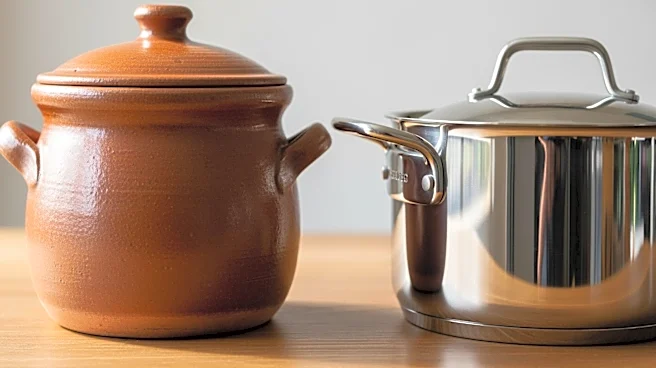
Before the widespread use of metal cookware, the pipkin was a common cooking vessel. Made
from earthenware, pipkins were used for cooking over direct heat from coals or wood fires. These pots were not placed directly in the flame, as the ceramic material could crack under intense heat. Instead, they were designed with a handle and often featured three feet to stand over the heat source.
Late medieval and post-medieval pipkins sometimes had a hollow handle, allowing a stick to be inserted for easier manipulation. These early cooking vessels were typically unglazed or glazed only on the interior, and their design varied from spheroidal to straight, outwardly-sloping sides. The pipkin's design laid the groundwork for the development of more advanced cookware.
Transition to Metal Cookware
As metalworking techniques improved, metal cookware began to replace earthenware pots. In early modern Europe, saucepans were introduced with small iron trivets or stands, allowing them to be pushed into hot ashes for cooking. This innovation marked a significant shift in cooking practices, as metal saucepans offered greater durability and heat conductivity compared to their ceramic predecessors.
The transition to metal also allowed for the development of new cooking techniques, such as deglazing, which relies on the metal surface to create flavorful sauces. The introduction of metal saucepans represented a major advancement in culinary technology, enabling cooks to experiment with new recipes and methods.
The Modern Saucepan
Today, the saucepan is a versatile tool found in kitchens worldwide. Its design has been refined over the years to meet the needs of modern cooking. With sizes ranging from 1 to 4 quarts, saucepans are used for a variety of tasks, from boiling and simmering to making sauces and soups.
The modern saucepan's long handle and vertical sides make it easy to use, while its metal construction allows for even heat distribution. Despite its evolution, the saucepan remains true to its roots, continuing to serve as an essential piece of cookware in both home and professional kitchens.