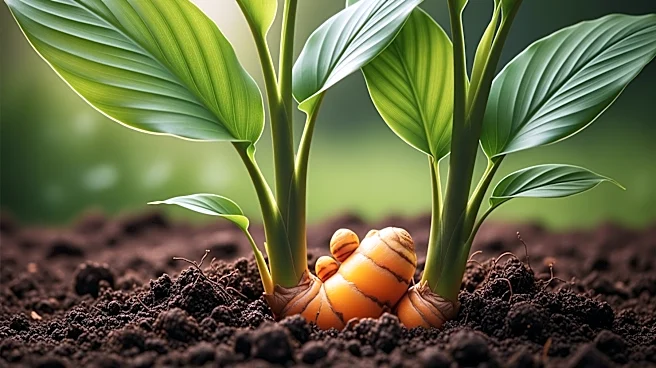







Turmeric, scientifically known as Curcuma longa, is a flowering plant belonging to the ginger family, Zingiberaceae. This perennial, rhizomatous, herbaceous plant is native to the Indian subcontinent and Southeast Asia. Known for its vibrant yellow rhizomes, turmeric is cultivated for its culinary, medicinal, and dyeing properties. This article explores the botanical characteristics and growth conditions of the turmeric plant.
Physical Description of the Turmeric Plant
Turmeric is a perennial
herbaceous plant that can grow up to 1 meter (3 feet 3 inches) tall. It features highly branched, yellow to orange, cylindrical rhizomes that are aromatic and serve as the primary source of the spice. The plant's leaves are alternate and arranged in two rows, divided into a leaf sheath, petiole, and leaf blade. The petiole can reach lengths of 50 to 115 cm (20 to 45 inches), while the leaf blades are typically 76 to 115 cm (30 to 45 inches) long.
The plant's inflorescence is characterized by white to green stem bracts, sometimes tinged with reddish-purple. The hermaphrodite flowers are zygomorphic and threefold, with bright yellow petals fused into a corolla tube. The turmeric plant's fruit is a capsule that opens with three compartments, containing seeds for propagation.
Growth Conditions and Cultivation
Turmeric thrives in tropical climates, requiring temperatures between 20 and 30 °C (68 and 86 °F) and high annual rainfall. The plant is typically grown in regions with a warm, humid climate, such as the Indian subcontinent and Southeast Asia. Turmeric is propagated through its rhizomes, which are gathered annually for consumption, dyeing, or propagation in the following season.
The cultivation process involves boiling the rhizomes in water, drying them, and then grinding them into a deep orange-yellow powder. This shelf-stable spice is widely used as a coloring and flavoring agent in many Asian cuisines, particularly in curries.
Challenges in Turmeric Cultivation
While turmeric is a hardy plant, it faces challenges related to its taxonomy and identification. Recent studies have shown that the taxonomy of Curcuma longa is problematic, with only specimens from South India being identifiable as true C. longa. The phylogeny, relationships, and variations of other species and cultivars in different parts of the world remain to be established and validated.
Despite these challenges, turmeric continues to be a valuable crop, celebrated for its culinary, medicinal, and cultural significance. Its unique botanical characteristics and growth requirements make it a fascinating subject for botanists and agriculturists alike.