





Foundation, a staple in the world of cosmetics, has a rich history that dates back to ancient times. This cosmetic product, used to create an even skin tone and cover imperfections, has undergone significant transformations over the centuries. From its early uses in ancient civilizations to its modern-day formulations, foundation has evolved in both composition and purpose.
Ancient Beginnings
The use of cosmetics, including foundation, can be traced back to antiquity.
Ancient Egyptians were among the first to use foundation, applying it to enhance their complexion. In 200 BC, Greek women used white lead powder and chalk to lighten their skin, a practice that was also popular among Roman women. The desire for a pale complexion was associated with affluence, as it indicated a life spent indoors, away from the sun.
During these early times, the ingredients used in foundation were often hazardous. Roman women favored a white lead paste, which could lead to severe health issues, including disfigurement and death. Despite the risks, both men and women used these products to achieve the desired pale look. The foundation of this era was made from a mixture of animal fat, starch, and tin oxide, providing a smooth texture and color.
Middle Ages to Renaissance
Throughout the Middle Ages, pale skin continued to be a symbol of wealth and status. Women would go to great lengths to achieve this look, even resorting to bleeding themselves to maintain a pale complexion. During the Italian Renaissance, women applied water-soluble lead paint to their faces, despite the known dangers.
In the 17th century, the use of ceruse, a lethal mixture of vinegar and white lead, became widespread. This period also saw the use of egg whites to create a shiny complexion. Theatrical actors of the 18th century wore heavy white base makeup, further popularizing the use of foundation in performance settings.
Modern Developments
The modern era of foundation began with Carl Baudin of the Leipziger Stadt theatre in Germany, who invented greasepaint to conceal the joint between his wig and forehead. This innovation laid the groundwork for theatrical makeup. In 1914, Max Factor revolutionized the industry with Flexible Greasepaint, designed for movie sets.
The first commercially available foundation, Max Factor's Pan-Cake, was developed for film use but quickly gained popularity among the general public. This product combined foundation and powder, offering a lightweight and natural look. By 1940, it was estimated that one in three North American women owned and wore Pan-Cake.
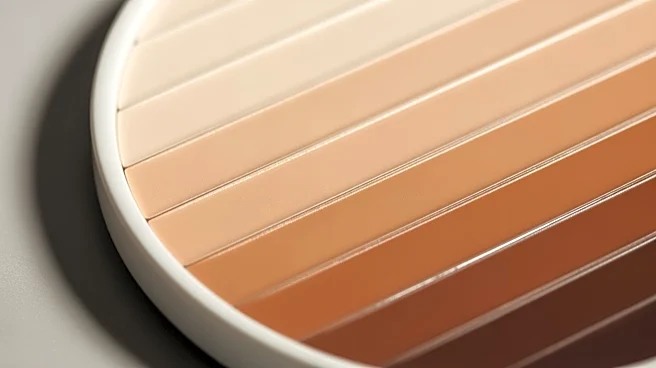
Today, foundation comes in various forms, including creams, liquids, and powders, with a wide range of shades to match different skin tones. The evolution of foundation reflects broader changes in beauty standards and technological advancements in the cosmetics industry.