




Continuously variable transmissions (CVTs) come in various designs, each with its own unique characteristics and applications. While the most common type uses a belt and pulley system, there are several other designs that offer distinct advantages. This article explores the different types of CVTs and their specific features.
Belt-Driven CVTs
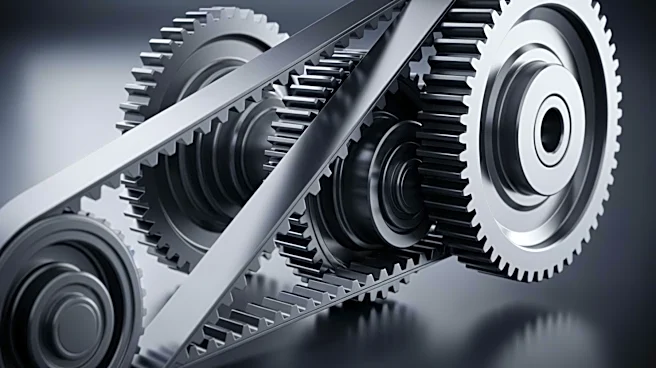
The belt-driven CVT is the most prevalent type, commonly used in passenger vehicles and small machinery. It operates using two
variable-diameter pulleys connected by a V-belt. The pulleys consist of two cone-shaped halves that move together and apart, changing the effective diameter and thus the gear ratio. This design allows for a smooth transition between speeds, providing a seamless driving experience.
Belt-driven CVTs are known for their simplicity and efficiency. They offer approximately 88% efficiency, which, while lower than manual transmissions, is offset by the ability to keep the engine running at its most efficient speed. This type of CVT is ideal for low-mass, low-torque applications, such as utility vehicles and snowmobiles.
Toroidal CVTs
Toroidal CVTs, like those used in the Nissan Cedric, consist of a series of discs and rollers. The discs are arranged point-to-point, with rollers in between that vary the ratio and transfer power. This design can withstand higher torque loads than pulley-based CVTs, making it suitable for more demanding applications.
One of the advantages of toroidal CVTs is their ability to reverse the direction of thrust within the transmission, eliminating the need for an external reverse gear. This feature adds to the versatility and efficiency of toroidal CVTs, making them a popular choice for certain vehicle models.
Hydrostatic CVTs
Hydrostatic CVTs use an engine-driven pump to deliver oil under pressure to hydraulic motors, which create the torque applied to the vehicle's wheels. The effective gear ratio is varied by adjusting the pump's displacement, allowing for smooth and continuous speed changes.
Hydrostatic CVTs are particularly useful in agricultural and construction equipment, where precise control of speed and torque is essential. They offer advantages such as capacity scalability, flexibility in mounting, and smooth operation. However, they tend to be less efficient than mechanical transmissions and are typically more expensive to produce.
Each type of CVT offers unique benefits and is suited to different applications. Whether it's the simplicity of a belt-driven system, the high torque capacity of a toroidal design, or the precise control of a hydrostatic CVT, these transmissions provide versatile solutions for a wide range of vehicles and machinery.