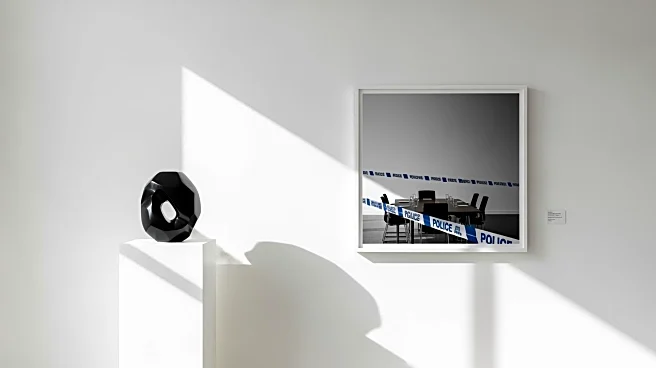



Minimalism in visual arts emerged as a significant movement in the 1960s, characterized by its focus on simplicity and the reduction of art to its essentials. This movement marked a departure from the complexity and emotional intensity of abstract expressionism, offering a new way to engage with art. Key figures such as Donald Judd and Agnes Martin played pivotal roles in shaping this movement, which has continued to influence art practices today.
Historical Context
Minimalism in visual arts is often seen as a reaction to the abstract expressionism that dominated the art scene in the 1940s and 1950s. Abstract expressionism was known for its emotional intensity and complexity, which minimalism sought to counteract by emphasizing simplicity and clarity. Emerging in New York in the early 1960s, minimalism was part of a broader trend towards geometric abstraction, with artists exploring new ways to present art that focused on the essentials.
The movement gained traction through influential exhibitions such as "Primary Structures: Younger American and British Sculpture" at the Jewish Museum in New York in 1966. This exhibition showcased the works of artists who were moving towards geometric abstraction, helping to solidify minimalism as a distinct art movement. The exhibition "Systemic Painting" at the Solomon R. Guggenheim Museum further highlighted the minimalist approach, focusing on shaped canvas, color field, and hard-edge painting.
Key Figures and Contributions
Several artists were instrumental in the development of minimalism. Donald Judd, known for his "specific objects," moved away from traditional painting to create works that occupied a space between painting and sculpture. His approach emphasized the literal and physical presence of art, challenging conventional categories and encouraging viewers to engage with art in new ways.
Agnes Martin, another key figure, contributed to the minimalist movement with her serene and meditative paintings. Her work often featured subtle grids and lines, reflecting a minimalist aesthetic that focused on simplicity and tranquility. Martin's art was not about self-expression but rather about creating an experience of calm and contemplation.
Legacy and Influence
Minimalism has had a lasting impact on the art world, influencing subsequent movements and practices. It served as a bridge to postminimal art practices, which continued to explore the boundaries of art and its presentation. The minimalist approach to art, with its emphasis on simplicity and reduction, has inspired artists across various disciplines, including music and design.
The movement's focus on the essentials and its rejection of unnecessary complexity have resonated with artists seeking to create art that is both accessible and profound. Minimalism's legacy is evident in the continued exploration of geometric abstraction and the use of industrial materials in art, reflecting its enduring influence on contemporary practices.