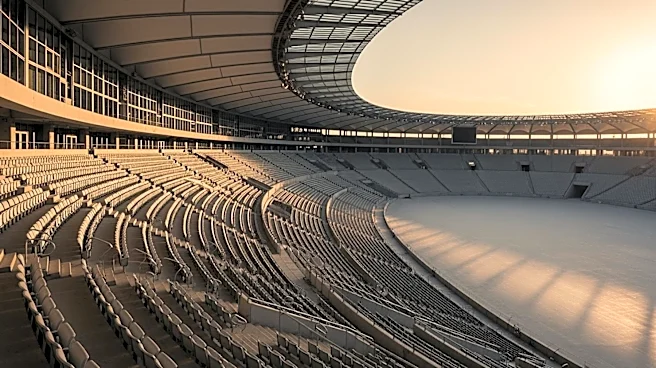







Estadio Nacional Julio Martínez Prádanos in Santiago, Chile, is more than just a sports venue. Its history is rich with significant events that have shaped its legacy. From hosting international sports competitions to being a site of political turmoil, the stadium has witnessed a wide array of historical moments. This article explores the various transformations and events that have marked the history of Estadio Nacional.
Early Years and Sporting Events
Construction of Estadio Nacional
began in February 1937, and it was inaugurated on December 3, 1938. The architecture was inspired by the Olympiastadion in Berlin, Germany, and it quickly became a central hub for sports in Chile. The stadium hosted the South American Championship of Champions in 1948, a competition that inspired the creation of the UEFA Champions League and the Copa Libertadores.
Over the years, Estadio Nacional has been the venue for numerous significant sporting events. It hosted all matches of the 1941, 1945, and 1955 South American Football Championships, as well as several matches of the 1991 and 2015 Copa América. These events solidified its status as a premier location for international sports in South America.
Political Turmoil and Human Rights
The stadium's history is not limited to sports. Following the military coup in Chile on September 11, 1973, Estadio Nacional was used as a detention center by the Pinochet dictatorship. Between 12,000 and 20,000 people were detained there, with reports of torture and extrajudicial executions. The stadium became a symbol of the human rights abuses that occurred during this period.
In 2011, Chile set aside a section of the stadium to honor the prisoners who were detained there. This area, known as Escotilla n.º 8, serves as a reminder of the stadium's dark past and the resilience of those who suffered during the dictatorship.
Modernization and Cultural Impact
In recent years, Estadio Nacional has undergone several renovations to modernize its facilities. A major renovation plan was unveiled in 2009, aiming to make it the most modern stadium in South America. These improvements included a new roof, updated seating, and enhanced infrastructure, ensuring the stadium remains a top venue for sports and cultural events.
Beyond sports, Estadio Nacional has hosted numerous concerts and cultural events, attracting international artists and large audiences. Its ability to adapt and serve various purposes highlights its cultural significance in Chile and beyond.
Estadio Nacional's history is a testament to its importance as a venue that has witnessed both triumph and tragedy. Its legacy continues to evolve, reflecting the dynamic nature of Chilean society and its place in the world.