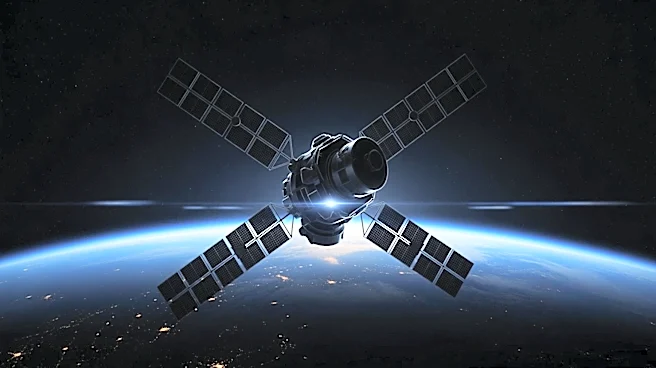







Explorer 11, launched in 1961, was a groundbreaking satellite that carried the first space-borne gamma-ray telescope. This mission marked the beginning of space gamma-ray astronomy and showcased several technological innovations. The satellite's design and instrumentation were crucial in advancing our understanding of cosmic phenomena and set the stage for future developments in space exploration.
Satellite Design and Stabilization
The design of Explorer 11 was a testament to the ingenuity
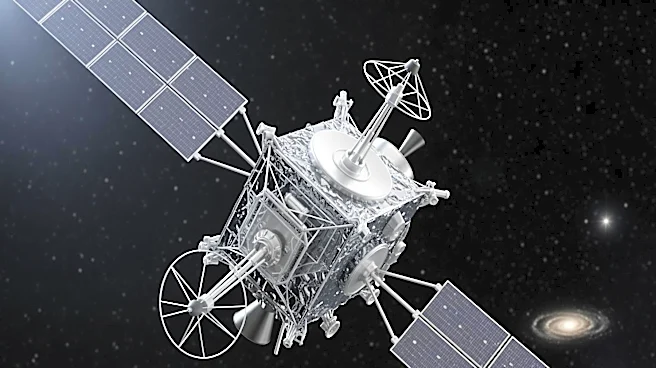
of its creators. The satellite was a spin-stabilized octagonal aluminum box mounted on a cylinder, measuring 30.5 x 30.5 x 58.5 cm. This configuration allowed for stable motion, with the satellite tumbling end-over-end about its transverse principal axis. The gamma-ray telescope assembly was mounted so that its axis of sensitivity rotated in the plane of tumble, ensuring effective data collection.
The orientation of the telescope's axis in space was determined to approximately 5 degrees using optical aspect detectors and the known radiation pattern of the vehicle antenna. This precision was crucial for mapping the direction of gamma rays and collecting accurate data.
Instrumentation and Detection Capabilities
Explorer 11 was equipped with a sophisticated gamma-ray telescope developed by MIT. The telescope consisted of an anticoincidence plastic shield, layers of Sodium iodide and Caesium iodide crystals, and a cylindrical Cherenkov detector. This setup was designed to detect cosmic gamma rays greater than 50 MeV and provided directional information on charged particles.
The telescope's solid-angle-area factor was about 4.3 cm², and its detection efficiency fell to zero at 15 degrees from the look direction. The energy thresholds for the detectors varied, with the Cherenkov detector capable of detecting electrons at 15 MeV and protons at 350 MeV. Despite the challenges posed by the Van Allen radiation belt and the failure of the onboard tape recorder, Explorer 11 managed to record valuable data during its mission.
Impact on Future Missions
Explorer 11's technological innovations paved the way for future satellite missions. The improved gamma-ray telescope flown on the Orbiting Solar Observatory 3 in 1967 achieved the first definitive observation of high-energy cosmic gamma rays from both galactic and extragalactic sources. Explorer 11's legacy continues to influence the design and capabilities of modern satellites, highlighting the importance of early technological advancements in space exploration.
The satellite's contributions to gamma-ray astronomy and its technological achievements remain a significant part of space exploration history, demonstrating the potential of innovative design and instrumentation in advancing scientific knowledge.