
Luminescence dating has a rich history that dates back to the mid-20th century. This method, which measures the last exposure of mineral grains to sunlight or heat, has evolved significantly over the decades.
From its initial conception to its widespread application in geology and archaeology, luminescence dating has become a cornerstone in understanding the timeline of past events.
Early Beginnings and Conceptualization
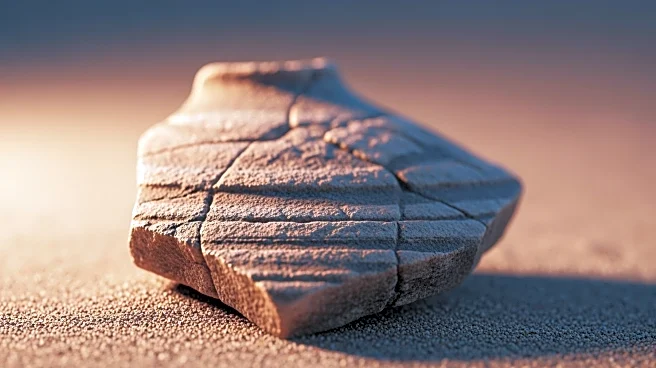
The concept of luminescence dating was first suggested in 1953 by Farrington Daniels, Charles A. Boyd, and Donald F. Saunders. They proposed using the thermoluminescence response of pottery shards to date the last incidence of heating. This idea laid the groundwork for experimental tests on archaeological ceramics, which began in 1960. Researchers focused on heated pottery, ceramics, burnt flints, and other heated objects, exploring the potential of thermoluminescence as a dating tool.
In 1963, Aitken et al. discovered that TL traps in calcite could be bleached by sunlight as well as heat. This finding expanded the scope of luminescence dating to include unheated sediments. By the 1970s and early 1980s, TL dating of light-sensitive traps in geological sediments became more widespread, marking a significant milestone in the field.
Development of Optical Dating Techniques
The development of optical dating techniques marked a turning point in luminescence dating. In 1984, David J. Huntley and colleagues introduced optically stimulated luminescence (OSL), a method that relies on optical stimulation to transfer electrons from one trap to holes located elsewhere in the lattice. This technique, although destructive, provided a new way to date mineral grains.
In 1988, Hütt et al. laid the groundwork for infrared stimulated luminescence (IRSL) dating of potassium feldspars. This advancement extended the datable range of luminescence dating, allowing researchers to study events up to a million years old. The principles behind optical and thermoluminescence dating were further expanded in 1994 to include surfaces made of granite, basalt, and sandstone.
Modern Applications and Impact
Today, luminescence dating is a widely used method in geology and archaeology, with more than 3500 publications per year and over 200 laboratories worldwide. Its applications have expanded beyond dating mineral grains to include verifying the authenticity of artifacts. By analyzing luminescence signals, researchers can confirm the age and origin of historical objects, providing valuable insights into human history.
The historical development of luminescence dating reflects the scientific community's dedication to understanding the past. From its early beginnings to its modern applications, luminescence dating continues to play a crucial role in unraveling the mysteries of our planet and human civilization.