






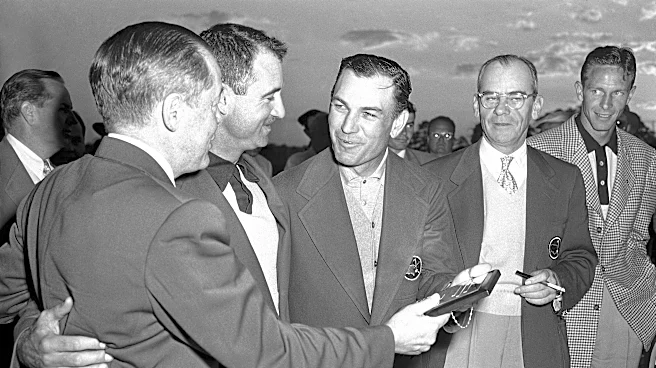

The 1956 Masters Tournament is remembered for one of the most dramatic comebacks in golf history. Jack Burke Jr. emerged victorious, overcoming a significant deficit to claim his first major championship. Held at the Augusta National Golf Club in Georgia, this tournament marked a pivotal moment in Burke's career, showcasing his resilience and skill.
Burke's Unlikely Comeback
Jack Burke Jr.'s victory at the 1956 Masters was nothing short of extraordinary. Entering the final
round, Burke was eight strokes behind the leader, Ken Venturi, an amateur who had dominated the tournament up to that point. Venturi had set a record with his opening round of 66, the best by an amateur at the Masters. However, Burke's determination and skill shone through as he managed to rally from this significant deficit.
On the final day, Burke shot a 71, one of only two players to break par in the last round. His performance was a testament to his ability to maintain composure under pressure. Venturi, on the other hand, struggled on the final nine holes, shooting a 42, which led to a disappointing 80 for the round. Burke's steady play allowed him to surpass Venturi and secure the victory by a single stroke.
The Historical Significance
Burke's win at the 1956 Masters was significant for several reasons. It was the last Masters Tournament played without a 36-hole cut, marking the end of an era in the tournament's format. Additionally, Burke's winning score of 289 remains one of the highest in Masters history, a record he shares with Sam Snead and Zach Johnson.
This victory was also a precursor to Burke's success later that year at the PGA Championship, where he claimed his second major title. Burke's achievements in 1956 solidified his status as one of the top golfers of his time, and his ability to win both the Masters and PGA Championship in the same year was a rare feat, accomplished by only a few golfers.
The Legacy of the 1956 Masters
The 1956 Masters Tournament left a lasting legacy in the world of golf. It was the first time CBS televised the third and fourth rounds, setting a precedent for future broadcasts. This move helped popularize the tournament and brought the excitement of the Masters to a wider audience.
Jack Burke Jr.'s victory is still celebrated as one of the greatest comebacks in golf history. His ability to overcome a significant deficit and maintain his composure under pressure is a testament to his skill and determination. The 1956 Masters remains a defining moment in Burke's career and a memorable chapter in the history of the tournament.