


Archaeoastronomy has evolved significantly over the centuries, transitioning from a fringe interest to a recognized interdisciplinary field. This journey reflects the growing appreciation for the complex ways in which ancient cultures engaged with the sky. By examining the historical development of archaeoastronomy, we can better understand its current methodologies and significance.
Early Beginnings and Precursors
The roots of archaeoastronomy can be traced back to the work of antiquarians
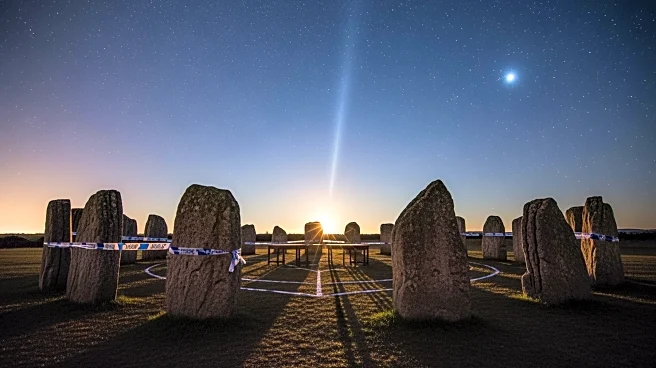
and early astronomers who speculated about the astronomical significance of ancient structures. In the 17th and 18th centuries, figures like John Aubrey and William Stukeley began to explore the astronomical orientations of sites such as Stonehenge. These early efforts laid the groundwork for later studies by highlighting the potential connections between ancient monuments and celestial events.
In the 19th century, astronomers like Richard Proctor and Charles Piazzi Smyth further investigated the astronomical alignments of the pyramids, contributing to the growing interest in the field. However, it wasn't until the mid-20th century that archaeoastronomy began to gain recognition as a distinct area of study, thanks in part to the work of pioneers like Alexander Thom and Gerald Hawkins.
The Rise of Archaeoastronomy
The 1960s marked a turning point for archaeoastronomy, as researchers like Alexander Thom and Gerald Hawkins introduced new methodologies and sparked widespread interest in the field. Thom's extensive surveys of megalithic sites in the British Isles suggested that prehistoric peoples practiced accurate astronomy, while Hawkins' controversial claims about Stonehenge as a Neolithic computer captured the public's imagination.
These developments led to increased academic attention and debate, with researchers from various disciplines contributing to the field's growth. The interdisciplinary nature of archaeoastronomy became more pronounced as scholars sought to integrate archaeological, astronomical, and statistical methods to better understand ancient skywatching practices.
Modern Archaeoastronomy
Today, archaeoastronomy is a well-established field that continues to evolve as new discoveries and technologies emerge. Researchers now have access to advanced tools and techniques, such as computer simulations and satellite imagery, which enhance their ability to analyze ancient sites and artifacts. This technological progress has expanded the scope of archaeoastronomy, allowing for more precise and comprehensive studies.
Despite its advancements, the field still faces challenges, including the need to balance scientific rigor with cultural sensitivity. Archaeoastronomers must navigate the complexities of interpreting ancient beliefs and practices while maintaining a commitment to evidence-based research. As the field continues to grow, it remains an essential area of study for understanding the intricate relationship between humanity and the cosmos throughout history.