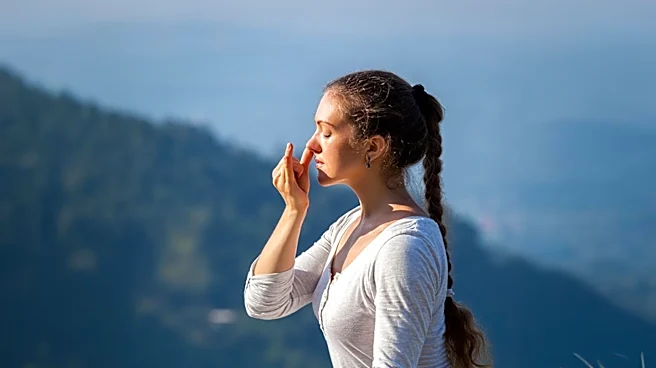


Ujjayi breathing, a fundamental component of modern yoga practices, has a rich historical background that traces back to ancient traditions. Known as the "victorious breath," this pranayama technique has evolved over time, finding its place in contemporary yoga styles such as Ashtanga and Iyengar. This article explores the historical context of Ujjayi breathing, its origins, and its integration into modern yoga.
Origins and Etymology
The term "Ujjayi" is derived from Sanskrit,
where "ut" signifies superiority and "jaya" means victory or conquest. This etymology reflects the empowering nature of the breath, which is intended to instill a sense of triumph and control in the practitioner. Historically, pranayama, the practice of breath control, was a marginal aspect of yoga, as noted by yoga scholar Andrea Jain. In classical texts like the Bhagavad Gita and the Yoga Sutras of Patanjali, pranayama was associated with the complete cessation of breathing, a stark contrast to its modern interpretation.
The modern practice of Ujjayi breathing, as we know it today, was popularized in the 20th century by influential yoga teachers such as Pattabhi Jois and B. K. S. Iyengar. Both were students of the renowned yoga master Tirumalai Krishnamacharya, who played a pivotal role in shaping contemporary yoga practices.
Ujjayi Breathing in Modern Yoga
In the context of modern yoga, Ujjayi breathing is closely associated with Ashtanga yoga, a dynamic and physically demanding style developed by Pattabhi Jois. In Ashtanga, Ujjayi breathing is synchronized with the movement between asanas, creating a seamless flow that enhances concentration and endurance.
B. K. S. Iyengar, another prominent figure in the yoga world, described Ujjayi breathing in his seminal work, "Light on Yoga." In Iyengar yoga, the focus is on precision and alignment, with Ujjayi breathing practiced in a seated position. This approach emphasizes the expansion of the lungs and the control of the breath, which is believed to have therapeutic effects on the body and mind.
The Evolution of Ujjayi Breathing
The evolution of Ujjayi breathing from its classical roots to its modern application highlights the adaptability and resilience of yoga as a practice. While the historical context of pranayama emphasized breath cessation, the contemporary interpretation focuses on breath control and synchronization with movement.
This shift reflects a broader trend in yoga, where traditional practices are adapted to meet the needs of modern practitioners. Ujjayi breathing, with its distinctive sound and rhythmic pattern, continues to be a vital component of yoga, offering practitioners a means to deepen their practice and connect with their inner selves.