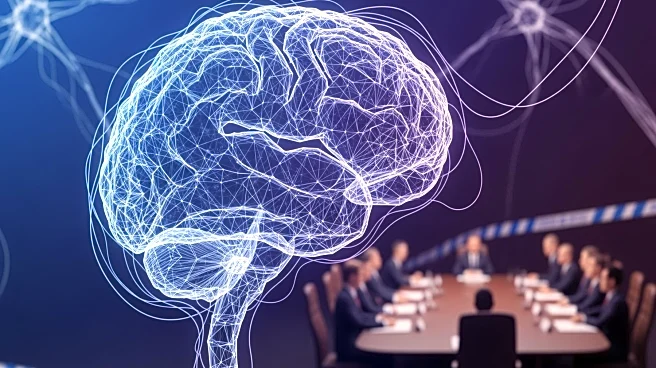




Reasoning is a fundamental aspect of human nature, setting us apart from other species. It involves the capacity to make sense of things, apply logic, and establish facts. This ability is closely linked to various human activities such as philosophy, science, language, mathematics, and art. Understanding reasoning's role in human nature provides insight into how we interact with the world and each other.
Reasoning and Human Activities
Reasoning is not just a mental exercise; it
is deeply embedded in many human activities. In philosophy, reasoning helps us explore fundamental questions about existence, knowledge, and ethics. Philosophers use reasoning to construct arguments and challenge existing beliefs, pushing the boundaries of human understanding. Similarly, in science, reasoning is crucial for forming hypotheses, conducting experiments, and interpreting data. Scientists rely on logical reasoning to draw conclusions and advance knowledge.
Language and mathematics also heavily depend on reasoning. Language allows us to communicate complex ideas and emotions, and reasoning helps us understand and construct meaningful sentences. In mathematics, reasoning is used to solve problems and prove theorems, providing a foundation for technological advancements. Art, too, involves reasoning, as artists use it to convey messages and evoke emotions through their work.
Reasoning as a Human Trait
Reasoning is often considered a defining trait of human nature. It allows us to reflect on our actions, make decisions, and adapt to new situations. This capacity for self-reflection and adaptation is what enables humans to change their goals, beliefs, and attitudes over time. Reasoning also plays a role in our ability to justify practices, institutions, and beliefs, whether they are new or existing.
The ability to reason is linked to the concept of freedom and self-determination. By reasoning, individuals can make informed choices and take control of their lives. This aspect of reasoning is what makes it a powerful tool for personal and societal growth.
The Evolution of Reasoning
Throughout history, reasoning has evolved alongside human civilization. Early philosophers like Aristotle distinguished between logical reasoning and intuitive reasoning, recognizing the importance of both. Over time, reasoning has become more formalized, with the development of logic as a field of study. This evolution has allowed humans to refine their reasoning skills and apply them to various domains.
In modern times, reasoning continues to be a subject of study in psychology and cognitive science. Researchers explore how people reason, the cognitive processes involved, and how cultural factors influence reasoning. Understanding these aspects can help improve education, decision-making, and problem-solving in everyday life.