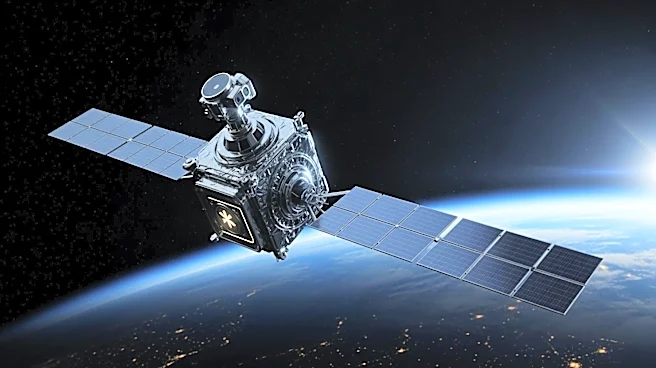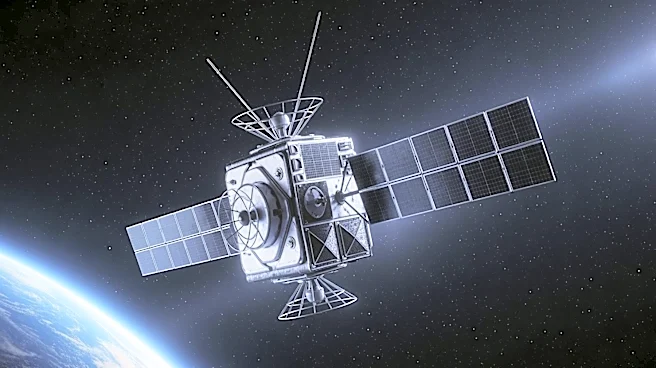

Explorer 1, launched in 1958, was a landmark achievement for the United States, marking its entry into the Space Race. Beyond its immediate success, Explorer 1 left a lasting legacy in the field of space
exploration and science. Its contributions to our understanding of space and its influence on subsequent missions have cemented its place in history as a pivotal moment in the exploration of the final frontier.
Pioneering Discoveries
One of the most significant contributions of Explorer 1 was the discovery of the Van Allen radiation belts. This discovery was made possible by the satellite's onboard cosmic ray detector, which was designed to measure high-energy particles. The data collected by Explorer 1 revealed the presence of these belts of charged particles, which are trapped by Earth's magnetic field. This finding was a major scientific breakthrough and provided valuable insights into the Earth's magnetosphere. The Van Allen belts have since become a fundamental aspect of space science, influencing the design and operation of future satellites and spacecraft.
Influence on Future Missions
The success of Explorer 1 paved the way for the long-running Explorers program, which has launched numerous satellites over the years. The program has been instrumental in advancing our understanding of space and has contributed to a wide range of scientific discoveries. Explorer 1's success demonstrated the feasibility of using satellites for scientific research, leading to the development of more sophisticated instruments and missions. The data and experience gained from Explorer 1 informed the design of subsequent satellites, allowing for more precise measurements and a deeper understanding of space phenomena.
A Symbol of American Ingenuity
Explorer 1 also served as a symbol of American ingenuity and determination during the Cold War. Its successful launch was a response to the Soviet Union's earlier achievements with Sputnik, and it demonstrated the United States' ability to compete in the Space Race. The mission showcased the collaborative efforts of scientists and engineers from the Jet Propulsion Laboratory and the Army Ballistic Missile Agency, highlighting the importance of teamwork and innovation in achieving ambitious goals. Explorer 1's legacy continues to inspire new generations of scientists and engineers, encouraging them to push the boundaries of what is possible in space exploration.
In conclusion, Explorer 1's impact on space exploration and science is undeniable. Its pioneering discoveries, influence on future missions, and symbolic significance have left an indelible mark on the history of space exploration. As we continue to explore the cosmos, the legacy of Explorer 1 serves as a reminder of the power of human ingenuity and the potential of space technology to transform our understanding of the universe.