



Baking an angel food cake is both an art and a science, requiring precision and care to achieve its signature light and airy texture. This article delves into the techniques and challenges involved in creating this delicate dessert, offering insights into the process that transforms simple ingredients into a heavenly cake.
The Importance of Technique
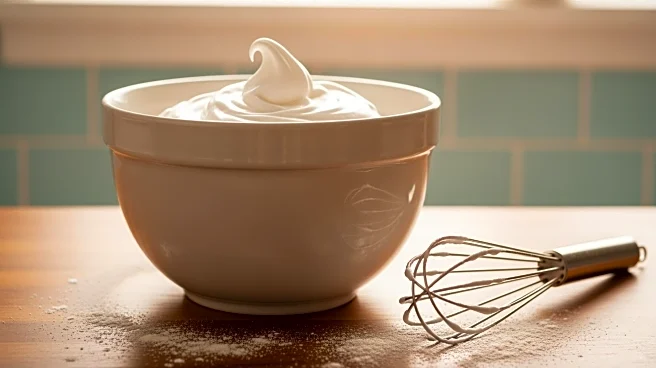
The process of making angel food cake begins with whipping egg whites to a foam. This step is crucial, as the whipped egg whites are
the sole leavening agent, providing the cake with its lift and structure. The egg whites must be whisked until they form soft peaks, at which point sugar is gradually added to stabilize the foam.
Folding in the flour and remaining sugar is a delicate process. Overmixing can collapse the air bubbles, resulting in a dense cake. Bakers must carefully fold the dry ingredients into the egg mixture, ensuring that the batter retains its volume. This step is often seen as a challenge, as it requires a gentle touch and attention to detail.
Baking and Cooling Techniques
Angel food cake is traditionally baked in an ungreased tube pan, which allows the batter to climb the sides and maintain its height. The pan's design, with a tube in the center, ensures even heat distribution, which is essential for the cake's uniform rise.
After baking, the cake is cooled upside down. This technique prevents the cake from collapsing under its own weight, preserving its airy texture. The pan is often equipped with small feet to facilitate this cooling process. However, in cooler kitchens, there is a risk of the cake contracting and falling from the pan before it has fully set.
Overcoming Common Challenges
Baking angel food cake comes with its set of challenges. One common issue is the collapse of the batter, which can occur if the egg whites are over-whisked or if the batter is overmixed. Additionally, any oil contamination from bowls or utensils can prevent the egg whites from reaching their full volume.
To address these challenges, bakers often take precautions such as using clean, dry equipment and avoiding flavorings based on essential oils. Some bakers also place the batter in a cold oven before heating it up, allowing the bubbles to expand more slowly and giving the proteins more time to set.
Despite these challenges, the reward of a perfectly baked angel food cake is well worth the effort. Its light, airy texture and subtle sweetness make it a favorite for many, proving that with the right techniques, anyone can master the art of baking this classic dessert.