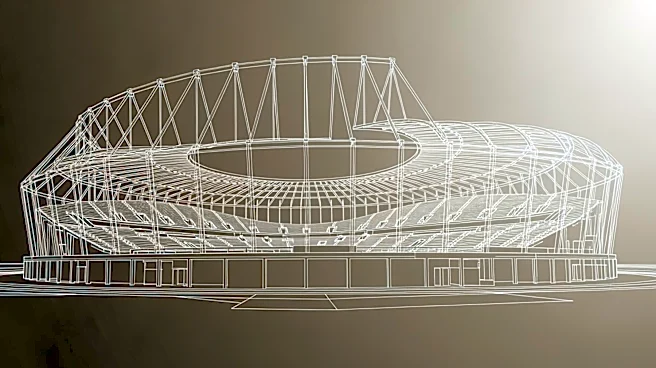




Stade de Gerland, located in Lyon, France, has a rich history that reflects its evolution from a multi-purpose sports venue to a modern stadium. Originally conceived in the early 20th century, the stadium has undergone numerous transformations to meet the changing demands of sports and entertainment. This article explores the key milestones in the development of Stade de Gerland, highlighting its architectural and functional changes over the decades.
Early Conception and Construction
The idea for Stade de Gerland was born in 1910 when Lyon's mayor, Édouard Herriot, envisioned a sports complex that included an athletics track and a velodrome. The project was officially mandated in 1912, with local architect Tony Garnier tasked with its design and construction. Work began in 1914, but the outbreak of World War I halted progress. Construction resumed in 1919, aided by German prisoners of war, and by 1920, the stadium was operational. It was officially inaugurated in 1926 by Herriot, marking the beginning of its long history as a sports venue.
Initially, Stade de Gerland featured a cycling track, which was later removed to increase seating capacity. This change was part of a broader effort to adapt the stadium to the growing popularity of football and other sports. The removal of the cycling track allowed for an expansion that increased the stadium's capacity to 50,000 spectators.
Renovations and Modernization
Over the years, Stade de Gerland has undergone several renovations to keep up with international standards. In 1984, minor renovations were carried out to prepare the stadium for UEFA Euro 1984. This included the construction of the Jean Bouin and Jean Jaurès stands. Further significant renovations took place in preparation for the 1998 FIFA World Cup. The north and south stands were completely dismantled and rebuilt, and the athletics track was removed to comply with FIFA's all-seated stadium requirement. These renovations, led by architect Albert Constantin, resulted in a modernized stadium with a capacity of 40,500.
The stadium's capacity was later reduced to 35,029 when Lyon OU, a rugby club, became its primary tenant in 2017. This change reflected a shift in the stadium's primary use from football to rugby, following the departure of Olympique Lyonnais to a new venue.
Cultural and Sporting Significance
Stade de Gerland has hosted numerous significant sporting events, including matches for the 1954 and 1972 Rugby League World Cups, UEFA Euro 1984, the 1998 FIFA World Cup, and the 2007 Rugby World Cup. These events have cemented its status as a key venue in international sports.
Beyond sports, the stadium has also been a popular concert venue, hosting performances by renowned artists such as The Rolling Stones, Michael Jackson, and Pink Floyd. This dual role as a sports and entertainment venue highlights its versatility and cultural importance in Lyon.
In conclusion, Stade de Gerland's history is a testament to its adaptability and enduring significance. From its early days as a multi-purpose sports complex to its current role as a rugby stadium, it has continually evolved to meet the needs of its time, making it a landmark in Lyon's sporting and cultural landscape.