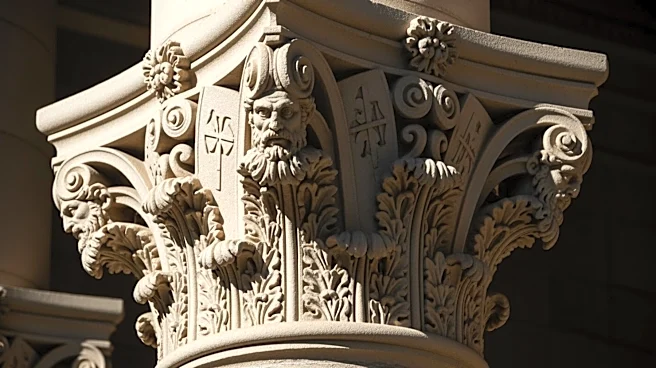







Atlases, in the context of European architecture, are sculptural supports carved in the form of a man. These figures serve as a substitute for columns, piers, or pilasters, adding both structural and aesthetic value to buildings. The term 'atlas' is derived from the Greek Titan Atlas, who was condemned to hold the sky on his shoulders for eternity. This architectural element has a rich history and has been used in various styles, including Neoclassical,
Baroque, and Gothic Revival.
Historical Origins
The concept of using human figures as architectural supports dates back to ancient civilizations. Caryatids, the female counterpart to atlases, were used in ancient Greece, notably at the Erechtheion on the Acropolis at Athens. Atlases, however, originated in Greek Sicily and Magna Graecia, Southern Italy. The earliest surviving examples are from the Early Classical Greek temple of Zeus in Agrigento, Sicily.
These figures were not only functional but also symbolic, representing the extreme effort required to support the weight of the structures above them. The Roman architect Vitruvius noted atlases and caryatids, transmitting the idea to Renaissance architecture, where they became a staple in the architectural vocabulary.
Evolution Through Architectural Styles
Atlases have been adapted into various architectural styles over the centuries. During the Mannerist and Baroque periods, they played a significant role in the design of buildings, often adding dramatic flair and grandeur. In the 18th and 19th centuries, atlases became fashionable, especially in Neoclassical architecture, as seen in the Hermitage Museum's portico in St. Petersburg, Russia.
The use of atlases continued into the Gothic Revival period, where they were sometimes depicted as angels, as seen in the Cathedral of Saint Peter of Alcantara in Petrópolis, Brazil. This adaptation shows the versatility of atlases in conveying different themes and styles while maintaining their structural purpose.
Atlases in Modern Architecture
In modern architecture, atlases are less common but still appreciated for their historical and artistic value. They are often found in restoration projects or as decorative elements in new constructions that aim to evoke classical styles. The Beaux Arts movement, for example, incorporated atlases into monumental entrances, showcasing their enduring appeal.
Atlases continue to be a testament to the blend of art and architecture, symbolizing strength and endurance. Their presence in buildings around the world highlights the cultural exchange and adaptation of architectural elements across different regions and eras.