
The Spanish-American War, fought during William McKinley's presidency, was a significant turning point in American history. It marked the United States' emergence as a global power and led to the acquisition
of overseas territories. McKinley's leadership during the war was crucial in shaping the nation's foreign policy and expanding its influence on the world stage.
Causes of the Spanish-American War
The conflict between the United States and Spain was rooted in the Cuban struggle for independence. By the time McKinley took office, the Cuban rebellion against Spanish colonial rule had intensified, drawing sympathy from the American public. Reports of Spanish atrocities and the harsh conditions in Cuba fueled calls for intervention.
McKinley initially sought a peaceful resolution, hoping to persuade Spain to grant Cuba independence or autonomy. However, negotiations failed, and tensions escalated following the explosion of the USS Maine in Havana Harbor. The incident, which killed 266 American sailors, was widely blamed on Spain, despite inconclusive evidence. Public pressure for war mounted, and McKinley eventually turned the matter over to Congress, which declared war on April 20, 1898.
Course of the War
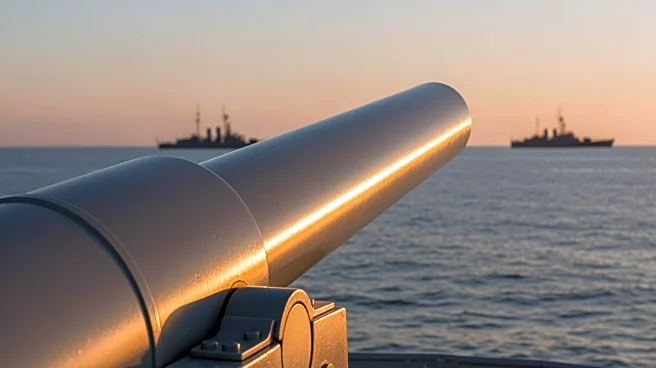
The Spanish-American War was brief but decisive. The U.S. Navy, under Commodore George Dewey, quickly defeated the Spanish fleet at the Battle of Manila Bay in the Philippines. This victory expanded the scope of the war beyond the Caribbean, as the United States sought to secure Spain's Pacific colonies.
In Cuba, American forces, led by Major General William Rufus Shafter, landed near Santiago de Cuba and engaged Spanish troops at the Battle of San Juan Hill. The U.S. victory, aided by the Rough Riders led by Theodore Roosevelt, was followed by the destruction of the Spanish Caribbean squadron. With Spain unable to resupply its forces, the war ended with the signing of the Treaty of Paris in December 1898.
Consequences and Legacy
The Treaty of Paris resulted in the United States acquiring Puerto Rico, Guam, and the Philippines, while Cuba was promised independence. McKinley's decision to annex the Philippines was controversial, as it marked a shift towards American imperialism. The acquisition of these territories expanded U.S. influence and established the nation as a global power.
The Spanish-American War also had domestic implications, fostering national unity and reconciliation between the North and South. McKinley's leadership during the war demonstrated the growing importance of the presidency in foreign affairs, setting a precedent for future administrations. The war's legacy continues to shape U.S. foreign policy and its role in international relations.