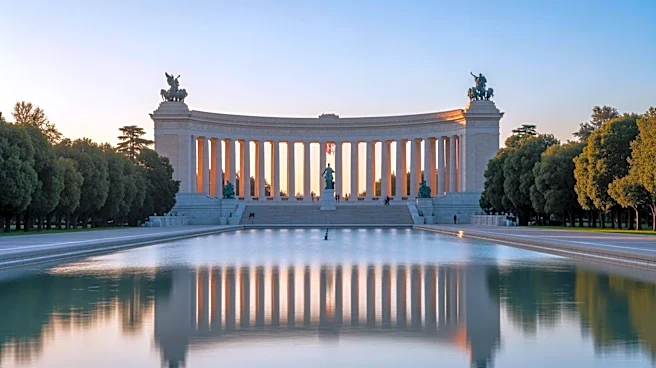







The Lincoln Memorial in Washington, D.C., is not only a monument to Abraham Lincoln but also a significant site in the history of the Civil Rights Movement. Over the years, it has served as a backdrop for pivotal moments in the struggle for equality and justice in the United States. Its symbolic power and central location have made it a natural gathering place for those advocating for civil rights.
A Symbol of Equality
The Lincoln Memorial's association with civil rights
is deeply rooted in its symbolism. Abraham Lincoln, the president who issued the Emancipation Proclamation, is celebrated for his role in ending slavery and preserving the Union. The memorial's design, with its Greek Revival architecture, evokes the democratic ideals of ancient Greece, reinforcing the principles of liberty and equality.
This symbolism was not lost on civil rights leaders, who saw the memorial as an ideal venue to amplify their message. The statue of Lincoln, seated and gazing forward, serves as a reminder of his commitment to justice and equality, making the memorial a fitting location for civil rights demonstrations.
The 1963 March on Washington
One of the most significant events in the history of the Lincoln Memorial was the 1963 March on Washington for Jobs and Freedom. This event drew over 250,000 participants to the National Mall, where they gathered to demand civil and economic rights for African Americans. The highlight of the march was Martin Luther King Jr.'s iconic "I Have a Dream" speech, delivered from the steps of the Lincoln Memorial.
King's speech, with its powerful call for racial equality and justice, resonated deeply with the ideals embodied by the memorial. The event is widely regarded as a turning point in the Civil Rights Movement, helping to galvanize public support for civil rights legislation.
Continuing Legacy
The Lincoln Memorial continues to be a site of significance for civil rights advocacy. It has hosted numerous events and gatherings aimed at promoting equality and justice. The memorial's enduring association with civil rights is a testament to its symbolic power and the legacy of Abraham Lincoln.
Today, the Lincoln Memorial stands as a reminder of the ongoing struggle for civil rights in the United States. Its role as a stage for civil rights advocacy underscores the importance of public spaces in the fight for justice and equality. As visitors stand before the statue of Lincoln, they are reminded of the progress made and the work that remains in the pursuit of a more just society.