







The chore jacket, also known as the French worker's jacket, has a rich history that dates back to 19th-century France. Originally designed for laborers, railroad workers, and farmers, this durable piece of clothing has evolved significantly over the years. Today, it is not only a symbol of practical workwear but also a fashion staple embraced by designers and consumers alike. This article delves into the historical development of the chore jacket and its
cultural impact, tracing its journey from utilitarian garment to fashion icon.
Origins in France
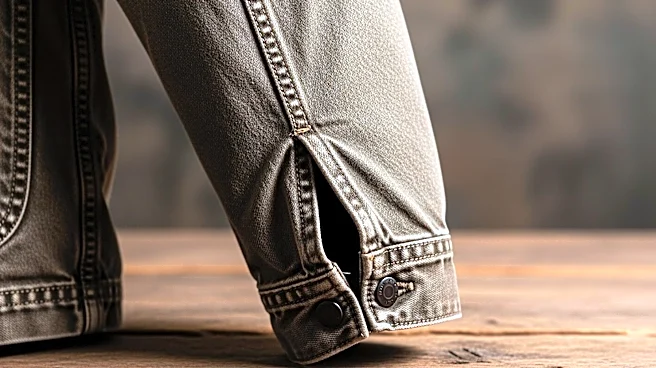
The chore jacket emerged during the industrial expansion of the 19th century in France. It was crafted from durable fabrics like denim, heavy cotton drill, or moleskin, featuring roomy pockets and button cuffs for easy sleeve rolling. The jacket's design was tailored to meet the needs of manual laborers, providing them with a practical and sturdy uniform. Its deep indigo color, achieved through natural dyes, earned it the name "bleu de travail," or "working blues," which later inspired the American term "blue-collar worker."
The simplicity and durability of the chore jacket made it an essential part of the French worker's attire. It was typically paired with matching trousers and was predominantly blue, although carpenters often wore black versions. Some workers even reserved a black jacket for Sunday church services. Traditional manufacturers like Le Mont Saint Michel, Vetra, and Le Laboureur continue to produce chore jackets in France, preserving its legacy.
Adoption in the United States
By the 1890s, the chore jacket had made its way to North America, where it was adopted by rural Midwestern workers and evolved into the barn jacket. This American variant shared the boxy cut and multiple front pockets of its French counterpart but was generally warmer and heavier, often featuring a waxed or weatherproof finish for outdoor work in colder climates. The barn jacket's most recognizable feature is the corduroy or leather collar, a detail absent from traditional French chore coats.
During the 1920s, the chore jacket was mass-produced in the United States, notably by workwear company Carhartt. Their 1917 version introduced innovations such as a corduroy-lined collar, triple-stitched seams, and copper-riveted pockets. Other American companies like L.L. Bean further diversified the style with new fabrics and colors, leading to variants made from waxed canvas.
Cultural Evolution
The chore jacket transitioned into mainstream fashion during the 1990s, reinterpreted by brands like J.Crew, Lands' End, Burberry, and Ralph Lauren. It became a preppy wardrobe essential, evoking nostalgia for traditional craftsmanship and outdoor life. The jacket transcended its utilitarian roots, becoming a symbol of rugged, understated Americana, worn by figures like Queen Elizabeth II and Princess Diana.
In the early 21st century, the chore jacket entered high fashion, appearing on runways of Valentino, Balenciaga, Loewe, Fendi, and Prada. Modern iterations include cropped silhouettes, exaggerated pockets, and luxury fabrics, confirming its evolution from workwear staple to an enduring icon of functional elegance. Today, chore jackets are commonly used as uniforms for restaurant serving staff in the U.S., showcasing their versatility and timeless appeal.