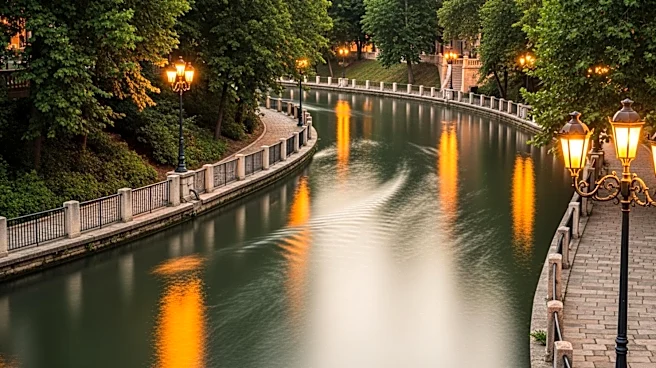





The San Antonio River Walk is a renowned city park and pedestrian street in San Antonio, Texas, celebrated for its vibrant atmosphere and scenic beauty. Its history is marked by significant developments that have transformed it into a major tourist attraction. This article delves into the historical evolution of the River Walk, highlighting key milestones and changes that have shaped its current form.
Early Beginnings and Initial Plans
The origins of the San Antonio River Walk can be
traced back to the early 20th century. In September 1921, a devastating flood along the San Antonio River prompted the need for flood control measures. Plans were developed to build an upstream dam and bypass a prominent bend of the river in the downtown area. Architect Robert Hugman played a pivotal role in shaping the River Walk's future by proposing a flood gate, a small dam, and a Tainter gate to regulate flow, surrounded by commercial development.
Hugman's vision faced initial resistance due to safety concerns, but over time, support for the commercial development of the river bend grew. In 1938, the San Antonio River Beautification Project was launched, marking the beginning of the River Walk's transformation. Hugman's persistence paid off, and he was named project architect, overseeing the construction of walkways, bridges, and extensive plantings.
Expansion and Growth
The River Walk continued to evolve through the decades, with significant expansions enhancing its appeal. The first major extension occurred in 1968, coinciding with HemisFair '68. This expansion extended the River Walk beyond its natural banks to the new convention center and theater, creating a lagoon at the Rivercenter Mall and Marriott Rivercenter Hotel.
In 1981, the Hyatt Regency San Antonio opened with a pedestrian connector linking Alamo Plaza to the River Walk, further integrating the city's major tourist attractions. Subsequent expansions in 2009 and 2011 extended the River Walk north to the Museum Reach and south to the Mission Reach, incorporating ecological improvements and trails for hiking and biking.
Modern Developments and Impact
Today, the San Antonio River Walk stands as a testament to successful urban planning and development. It has inspired similar projects in other cities, such as the Bricktown Canal in Oklahoma City and the Santa Lucía Riverwalk in Monterrey, Mexico. The River Walk's impact extends beyond tourism, serving as a cultural and social hub for locals and visitors alike.
Efforts to maintain the River Walk's distinctively local flair continue, with discussions at City Hall about limiting chain establishments. The River Walk's historical significance and ongoing improvements ensure its status as a cherished landmark in San Antonio, attracting millions of visitors each year.