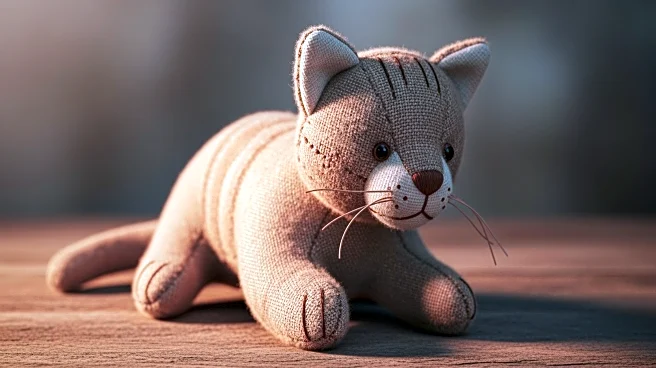




The Ithaca Kitty, originally known as "The Tabby Cat," holds a special place in the history of stuffed toys. Introduced in 1892, this popular toy sparked a fad for plush toys that lasted well into the 20th century. This article explores the historical significance of the Ithaca Kitty and its impact on the stuffed toy industry.
Origins and Design
The Ithaca Kitty was inspired by a real gray tabby cat named Caesar Grimalkin from Ithaca, New York. The cat's owners, William
Hazlitt Smith and Celia Smith, captured the likeness of their pet in a three-piece pattern designed by Celia. Despite Grimalkin being a polydactyl cat with seven toes on each front paw, the Smiths opted for a more conventional five-toed design, which they patented in October 1892.
The design was sold to Arnold Print Works, which printed the pattern on muslin and marketed it as "The Tabby Cat." The toy quickly gained popularity, with nearly 200,000 units sold during its first holiday season. Its lifelike appearance made it a favorite among consumers, and it was even used by farmers to scare away birds and by police stations to deter mice.
Impact on the Toy Industry
The success of the Ithaca Kitty marked a turning point in the stuffed toy industry. Its popularity led to the creation of other stuffed animals, including kittens, dogs, and bunnies. The toy's presence at the 1893 Chicago World's Fair and in department store windows nationwide helped solidify its status as a cultural icon.
The Ithaca Kitty's influence extended beyond its initial success, paving the way for the development of new stuffed toy designs and manufacturing techniques. It demonstrated the potential for stuffed toys to become cherished items, both as playthings and collectibles.
Legacy and Cultural Significance
The Ithaca Kitty's legacy is evident in the continued popularity of stuffed toys today. Its lifelike design set a standard for future plush toys, influencing the way they are created and marketed. The toy's impact is also reflected in popular culture, with writer Eugene Field citing it as inspiration for the calico cat in his poem "The Duel."
In conclusion, the Ithaca Kitty was more than just a toy; it was a pioneer in the stuffed toy industry. Its success and cultural significance continue to resonate, highlighting the enduring appeal of plush toys in society.