
Explorer 17 was a significant milestone in NASA's efforts to study Earth's upper atmosphere. Launched on April 3, 1963, from Cape Canaveral, this satellite was the first in a series of five Atmosphere
Explorer satellites. Its mission was to gather data on the density, composition, pressure, and temperature of the Earth's atmosphere, providing valuable insights into atmospheric science.
Launch Details
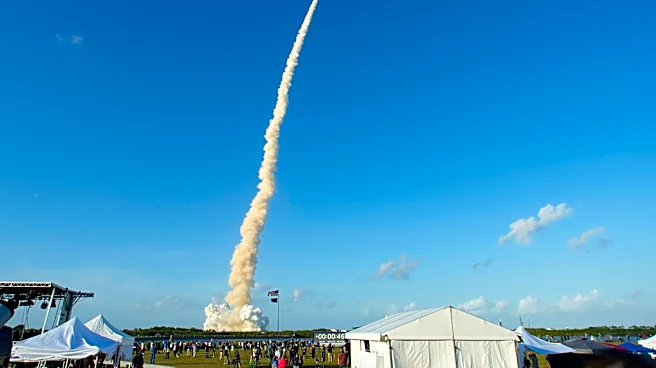
Explorer 17 was launched using a Delta B rocket, a reliable vehicle for sending satellites into orbit during that era. The launch took place at Cape Canaveral, a site known for its pivotal role in space exploration. The satellite was successfully placed into orbit, marking the beginning of its mission to study the upper atmosphere. The launch was a critical step in NASA's broader program to understand atmospheric conditions, which would later aid in scientific and meteorological applications.
The satellite itself was a pressurized stainless steel sphere, weighing 405 pounds and measuring 35 inches in diameter. Before reaching its intended orbit, Explorer 17 was spun up to about 90 revolutions per minute, ensuring stability and proper orientation for its instruments to function effectively.
Mission Objectives
Explorer 17 carried a suite of scientific instruments designed to measure various atmospheric properties. These included two spectrometers, four vacuum pressure gauges, and two electrostatic probes. The primary goal was to assess the density, composition, pressure, and temperature of the Earth's atmosphere. This data was crucial for understanding the physical properties of the atmosphere, which had implications for both scientific research and practical meteorological forecasting.
Despite the ambitious objectives, not all instruments functioned perfectly. One spectrometer malfunctioned, and another operated intermittently. However, the data collected from the functioning instruments provided valuable insights into atmospheric conditions, contributing to the scientific community's understanding of Earth's upper atmosphere.
Mission Duration and Conclusion
The mission of Explorer 17 was relatively short-lived, with the satellite's batteries failing on July 10, 1963, just 98 days after launch. Despite this early end to its operational life, Explorer 17 remained in orbit until November 24, 1966, when it re-entered the Earth's atmosphere after 1,325 days in space.
The data collected during its operational period was instrumental in advancing atmospheric science. Explorer 17's mission laid the groundwork for subsequent satellites in the Atmosphere Explorer series, each building on the knowledge gained from its predecessor. The satellite's contributions to understanding atmospheric properties were a testament to the importance of space exploration in scientific advancement.