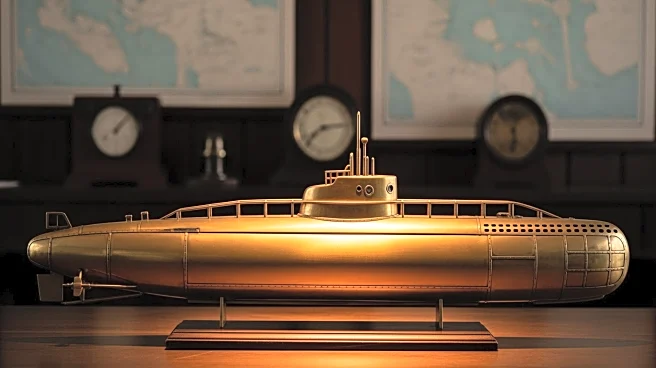

Robert Fulton, best known for his work on the steamboat, also made significant contributions to naval technology with his development of the Nautilus, the first practical submarine. Commissioned by Napoleon
Bonaparte, the Nautilus represented a groundbreaking advancement in underwater navigation and warfare.
The Vision for Submarine Warfare
Fulton's interest in submarine technology began during his time in France, where he was commissioned by Napoleon to design a vessel capable of underwater travel. The idea of a submarine was not entirely new, but Fulton's Nautilus was the first to be considered practical for military use.
Between 1793 and 1797, Fulton worked on the design of the Nautilus, experimenting with various concepts and materials. His goal was to create a vessel that could operate underwater for extended periods, providing a strategic advantage in naval warfare. The Nautilus was completed in 1800 and underwent successful trials on the Seine River.
Design and Capabilities
The Nautilus was a remarkable feat of engineering for its time. It was powered by a hand-cranked propeller and featured a collapsible mast and sail for surface travel. The vessel could submerge by taking on water ballast and was equipped with a rudimentary air supply system, allowing it to remain underwater for up to 17 minutes.
Fulton's design also included a torpedo, an early form of naval mine, which could be deployed against enemy ships. This innovation demonstrated Fulton's forward-thinking approach to naval warfare, as he envisioned submarines playing a crucial role in future conflicts.
Impact and Legacy
While the Nautilus was not adopted by the French government, its development marked a significant milestone in the history of naval technology. Fulton's work laid the groundwork for future advancements in submarine design, influencing naval strategies and warfare tactics.
The concept of underwater warfare continued to evolve, eventually leading to the development of more advanced submarines in the 20th century. Fulton's Nautilus was a precursor to these innovations, showcasing the potential of submarines as powerful tools in military operations.
In conclusion, Robert Fulton's Nautilus was a pioneering achievement in naval engineering. Although it did not see widespread use during Fulton's time, its design and capabilities foreshadowed the critical role submarines would play in modern warfare. Fulton's vision and ingenuity continue to inspire advancements in naval technology today.