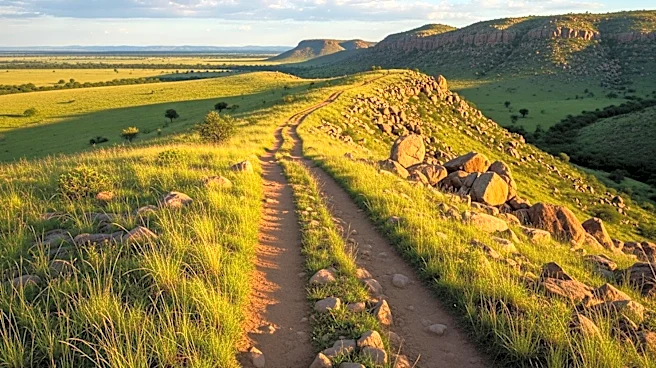








The Freedom Trail in South Africa offers a unique opportunity to experience the country's rich geographical and ecological diversity. Spanning 2,150 kilometers from Pietermaritzburg to Wellington, this mountain bike route traverses seven distinct biomes, showcasing the impressive geological and scenic variety of the region. From the high mountains of Lesotho to the expansive Great Karoo, the trail provides a window into the natural beauty and complexity
of South Africa's landscapes.
The Route and Its Challenges
The Freedom Trail is not just a physical journey but a technical challenge for mountain bikers. The trail is unmarked, requiring riders to navigate using maps and narratives. This adds an element of adventure and skill, as participants must be proficient in navigation to successfully traverse the route. Accommodation stops are strategically placed 6-8 hours apart, offering a range of options from guest houses to nature reserve cottages. These stops are fully serviced, allowing riders to travel light and focus on the journey itself.
The trail's technical demands are matched by its environmental challenges. Riders must contend with varying weather conditions, from the cool autumn months of March to May to the hot summer months of November to February. Winter brings its own set of challenges, with potential snowfalls at high points along the route. These conditions require careful planning and preparation, adding to the trail's allure for those seeking a true adventure.
Ecological Diversity Along the Trail
One of the most remarkable aspects of the Freedom Trail is its ecological diversity. The route crosses six mountain ranges and countless valleys, each offering a unique ecosystem. Riders will encounter unspoiled wilderness areas, national parks, private farms, and nature reserves, each contributing to the trail's rich tapestry of flora and fauna.
The trail's seven biomes include the high mountains of Lesotho, known for their rugged beauty and unique plant species. As riders descend into the Great Karoo, they are greeted by wide open spaces and a semi-desert environment that contrasts sharply with the lush mountain regions. This diversity not only enhances the visual experience but also provides insight into the ecological complexity of South Africa.
Conservation and Community Impact
The Freedom Trail is managed by the Freedom Trail Foundation, which plays a crucial role in conservation and community engagement. The foundation administers the Freedom Challenge Scholarship Fund, a charity established by past riders to provide educational scholarships to underprivileged scholars living in areas along the trail. This initiative highlights the trail's impact beyond recreation, fostering community development and environmental stewardship.
The trail's passage through both public and private land requires careful management to ensure sustainability. Riders must pre-arrange and book their journey, respecting the traversing rights granted over private land. This approach not only protects the environment but also supports local economies, making the Freedom Trail a model for responsible tourism and conservation.