





Skylab, the first U.S. space station, marked a significant milestone in space exploration when it was launched on May 14, 1973. This ambitious project by NASA aimed to expand human presence in space and conduct a variety of scientific experiments. However, the journey of Skylab was not without its challenges. From its launch to the initial hurdles faced in making it operational, Skylab's story is one of resilience and innovation.
The Launch of Skylab
Skylab was launched
using a modified Saturn V rocket, a powerful vehicle that had previously been used for the Apollo missions. The launch, sometimes referred to as Skylab 1, was a critical step in establishing the United States' first space station. The station was designed to host three crewed missions, allowing astronauts to live and work in space for extended periods. The launch itself was a success, placing Skylab into low Earth orbit, where it would serve as a platform for scientific research and observation.
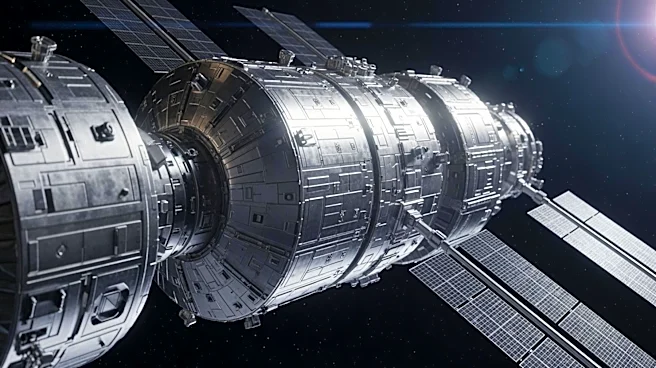
The station was constructed from a repurposed Saturn V third stage, known as the S-IVB, and included a workshop, a solar observatory, and several hundred life science and physical science experiments. This innovative use of existing technology was a testament to NASA's ability to adapt and repurpose resources for new missions. Skylab's launch marked the beginning of a new era in space exploration, where living and working in space became a reality.
Initial Challenges and Solutions
Despite the successful launch, Skylab faced significant challenges during its deployment. Severe damage occurred during the launch, including the loss of the station's micrometeoroid shield and one of its main solar panels. This damage resulted in a substantial power deficit, threatening the station's ability to function as intended. The debris from the lost micrometeoroid shield also became entangled in the remaining solar panel, preventing its full deployment.
NASA quickly mobilized to address these issues. The first crewed mission, Skylab 2, was tasked with repairing the station. The crew deployed a parasol-like sunshade to lower the station's temperature and conducted spacewalks to free the jammed solar panel. These efforts were crucial in stabilizing Skylab and ensuring its continued operation. The successful resolution of these challenges demonstrated the ingenuity and determination of NASA and its astronauts.
Legacy of Skylab's Launch
The launch and subsequent challenges of Skylab set the stage for future space missions. It provided valuable lessons in problem-solving and adaptability, which would be essential for the continued exploration of space. Skylab's ability to overcome initial setbacks and fulfill its mission objectives highlighted the potential for long-term human habitation in space.
Skylab's legacy continues to influence space exploration today, serving as a foundation for the development of future space stations and missions. Its story is a reminder of the complexities and rewards of venturing beyond our planet, paving the way for new discoveries and advancements in space science.