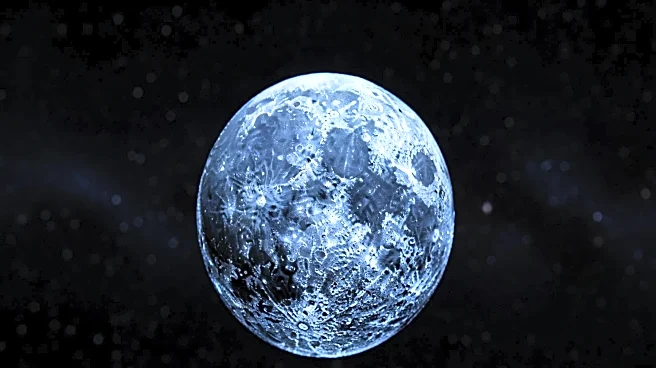




Lunar observation has fascinated humans for centuries, offering a glimpse into the mysteries of our closest celestial neighbor. The Moon, with its changing phases and unique phenomena, provides a rich tapestry for astronomers and casual observers alike. This article delves into the various phenomena associated with lunar observation, highlighting the Moon illusion, Earthshine, and the intriguing lunar occultations.
The Moon Illusion
One of the most captivating phenomena
observed during lunar observation is the Moon illusion. This optical illusion occurs when the Moon appears larger near the horizon than when it is higher in the sky. Despite appearing smaller near the horizon, the Moon is perceived as larger due to the Moon illusion. This phenomenon has puzzled observers for centuries and continues to be a topic of interest in the field of astronomy.
The Moon illusion is not caused by any physical change in the Moon's size or distance from Earth. Instead, it is a result of the way our brains interpret visual information. When the Moon is near the horizon, it is viewed in relation to other objects, such as trees or buildings, which can make it appear larger. As the Moon rises higher in the sky, it is seen against the vast expanse of the sky, making it appear smaller.
Earthshine: A Subtle Glow
Another fascinating phenomenon visible with the naked eye is Earthshine. Best observed shortly before or after a new moon, during the waning and waxing crescent phases, Earthshine is the faint glow of the non-illuminated side of the Moon. This glow is caused by sunlight reflecting off the surface of Earth and onto the night side of the Moon.
Earthshine is most visible when the Moon is a thin crescent, as the illuminated portion of the Moon is not bright enough to overpower the subtle glow. However, as the Moon reaches its first quarter, the sunlight-illuminated portion becomes too bright for Earthshine to be seen with the naked eye. Despite this, Earthshine can still be observed telescopically, offering a unique view of the Moon's surface.
Lunar Occultations
Lunar occultations are another intriguing aspect of lunar observation. An occultation occurs when a celestial object appears completely hidden by another, closer body due to the passage of the closer object directly between the more distant object and the observer. Due to the large apparent size of the Moon, lunar occultations are quite common.
These events are particularly interesting when a bright celestial object, such as a star or planet, is involved. The Moon frequently occults brighter stars and even planets due to its proximity to the ecliptic. Observing these occultations can be a rewarding experience for amateur astronomers, as they offer a chance to witness the dynamic interactions between celestial bodies.