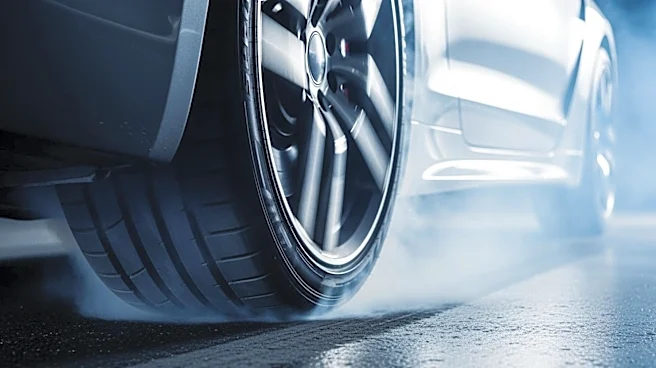




Burnouts, also known as peel outs or power brakes, are a thrilling spectacle in the world of motorsports. This technique involves keeping a vehicle stationary while spinning its wheels, causing the tires to heat up and produce smoke. While burnouts are often seen as a form of entertainment, they serve a practical purpose in drag racing. This article delves into the mechanics and significance of burnouts in motorsports, highlighting their role in enhancing
vehicle performance.
The Mechanics of a Burnout
Performing a burnout involves a delicate balance of power and control. In a rear-wheel-drive vehicle, the driver must engage both the gas and brake pedals simultaneously. The goal is to allow the rear tires to spin while keeping the car stationary, with the front wheels remaining motionless. This requires careful modulation of the brake pedal to ensure the front brakes hold the car in place while the rear tires lose grip and spin.
For front-wheel-drive vehicles, the process is slightly different. The driver engages the parking brake to lock the rear tires and then applies the gas to break the front wheels loose. This technique is more challenging in four-wheel-drive and all-wheel-drive vehicles due to their superior traction, which requires more engine power to achieve a burnout.
The Purpose of Burnouts in Drag Racing
Burnouts are not just for show; they play a crucial role in drag racing. The primary purpose of a burnout is to heat the tires, as drag racing slicks perform better at higher temperatures. A burnout also cleans the tires of debris and lays down a layer of rubber on the starting line, improving traction for the race.
The origins of burnouts can be traced back to the mid-1960s at the Ted Edwards Drag Strip in Fairburn, Georgia. Here, Buddy Houston and his team used water and bleach to initiate burnouts, a practice that quickly spread across the country. Today, drag race tracks often have a designated wet-surface area, known as the "water box," to facilitate burnouts.
Burnouts as a Competitive Sport
Beyond their practical use in racing, burnouts have evolved into a competitive sport. Burnout contests are judged based on crowd response, with style and attitude being key factors. These contests are particularly popular in Australia and North America, where cars are sometimes sponsored or purpose-built for burnouts.
While burnouts are a staple in motorsports, they are illegal on public property in most countries due to safety concerns. However, they remain a celebrated tradition in racing culture, symbolizing the raw power and skill of motorsport enthusiasts.