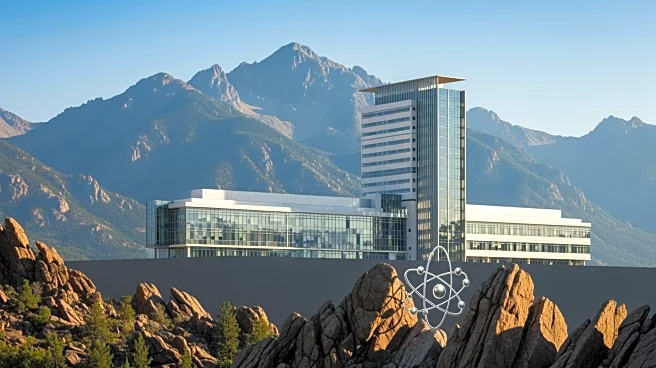




The National Laboratory of the Rockies, previously known as the National Renewable Energy Laboratory (NREL), has played a pivotal role in the advancement of renewable energy research in the United States. Located in Golden, Colorado, this federally funded research and development center has been at the forefront of energy innovation since its inception. This article explores the historical development of the laboratory, highlighting key milestones
and its ongoing contributions to renewable energy.
Early Beginnings and Establishment
The origins of the National Laboratory of the Rockies can be traced back to the 1973 oil crisis, which underscored the need for energy independence in the United States. In response, the Solar Energy Research, Development and Demonstration Act of 1974 was signed, leading to the establishment of the Solar Energy Research Institute (SERI) in 1977. This marked the first national-scale effort to advance solar power, with Paul Rappaport serving as the founding director.
Initially, SERI focused on popularizing existing technologies such as biomass conversion and passive solar energy. During its first year, the institute achieved a significant milestone with thin-film solar cells reaching 10% efficiency. However, the national focus soon shifted towards nuclear energy, until the Three Mile Island accident in 1979 renewed public interest in alternative renewable solutions.
Transition to a National Laboratory
In 1991, under the administration of President George H. W. Bush, the institute was designated as a national laboratory and renamed the National Renewable Energy Laboratory. This transition marked a new era for the laboratory, allowing it to expand its research scope and solidify its position as a leader in renewable energy research. Despite fluctuations in funding over the years, the laboratory continued to make significant strides in energy innovation.
The laboratory's focus broadened to include not only solar energy but also wind and bioenergy technologies. It became home to the National Center for Photovoltaics, the National Bioenergy Center, and the National Wind Technology Center, each dedicated to advancing their respective fields.
Recent Developments and Future Prospects
In December 2025, the Department of Energy announced a new name for the laboratory: the National Laboratory of the Rockies. This change reflects the laboratory's expanded mission and its commitment to addressing broader energy challenges. The laboratory continues to engage in technology transfer, working with private sector partners to apply research in practical settings.
The laboratory's efforts in innovation and technology transfer have been recognized with numerous R&D 100 Awards, highlighting its contributions to scientific research with market applications. As the laboratory looks to the future, it remains dedicated to reducing the nation's reliance on fossil fuels and advancing renewable energy technologies.
The National Laboratory of the Rockies stands as a testament to the United States' commitment to energy innovation and sustainability. Its evolution from a solar research institute to a comprehensive national laboratory underscores its pivotal role in shaping the future of renewable energy.