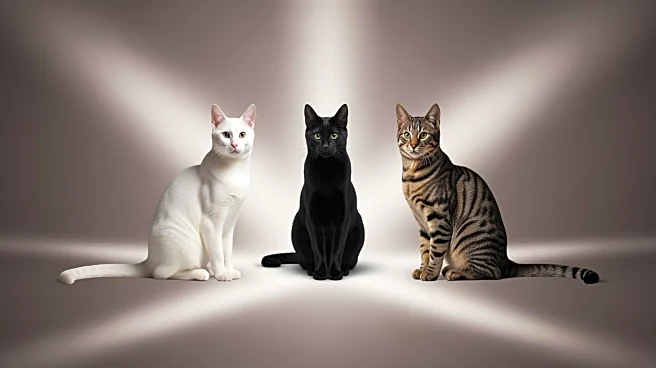

The development of the Russian White, Black, and Tabby cats is a story of perseverance and dedication. Breeders faced numerous challenges in their quest to create these unique breeds, yet their successes
have led to the recognition and popularity of these cats today. This article explores the breeding challenges and triumphs that marked the journey of these fascinating feline breeds.
Overcoming Early Obstacles
The breeding of the Russian White, Black, and Tabby cats was not without its difficulties. In Australia, Dick and Mavis Jones of Myemgay Cattery embarked on a breeding program in 1971, which involved crossing a white Siberian cat with a Russian Blue. This initial pairing produced two white kittens, but the journey was far from straightforward.
One of the significant challenges faced by the breeders was the loss of White Rose, the foundation female for the Russian White breed. White Rose developed milk fever when her kittens were just three weeks old, leading to her untimely death. Despite this setback, the breeders persevered, raising the kittens with a doll's bottle and carnation milk until they were old enough to eat solid food.
Achieving Breeding Success
Despite the early challenges, the breeding program eventually achieved success. The breeders continued to mate their first-generation white kittens with Russian Blue studs, producing subsequent generations of Russian Whites. By the fourth generation, the Russian Whites were granted full registration and were eligible to compete for championship status.
The success of the breeding program was a result of careful planning and dedication. The breeders meticulously selected the best cats from each generation to continue the line, ensuring that the desired traits were passed down. This commitment to excellence was instrumental in the eventual recognition of the Russian White, Black, and Tabby cats.
Recognition and Legacy
The recognition of the Russian White, Black, and Tabby cats is a testament to the hard work and perseverance of their breeders. Today, these breeds are fully recognized in Australia, New Zealand, and South Africa, with varying levels of recognition in other parts of the world. In 2010, the American Cat Fanciers Association recognized the Russian Black and Russian White for championship status.
The journey of these breeds from their challenging beginnings to their current status is a story of triumph over adversity. The dedication of breeders like Dick and Mavis Jones has ensured that the Russian White, Black, and Tabby cats continue to be cherished by cat enthusiasts around the world.