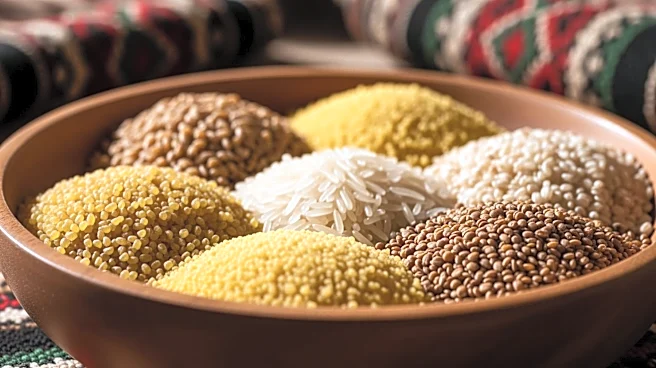

Grains are a fundamental component of Middle Eastern cuisine, serving as the foundation for many traditional dishes. Wheat and rice are the most prominent grains in the region, but other grains like barley
and maize also play important roles. These grains are not only staples in the diet but also reflect the agricultural history and cultural practices of the Middle East.
Wheat: The Staple Grain
Wheat is the cornerstone of Middle Eastern cuisine, with bread being a universal food consumed at nearly every meal. The region's history with wheat dates back to ancient Mesopotamia, where it was first cultivated. Today, wheat is used in a variety of forms, from flatbreads like pita to more complex dishes like burghul and couscous.
Burghul, or cracked wheat, is made by partially cooking wheat grains, drying them, and breaking them into pieces. It is often cooked with water and flavorings, similar to rice, and is a key ingredient in dishes like tabbouleh. Couscous, another wheat-based dish, is a staple in North African cuisine and has gained popularity throughout the Middle East.
Rice: A Versatile Ingredient
Rice is another essential grain in Middle Eastern cooking, introduced to the region during the Persian Empire. It is often served plain under grilled meats or in stews, but more elaborate rice dishes feature layers of meat, vegetables, sauces, nuts, or dried fruits. These dishes showcase the versatility of rice and its ability to absorb and complement a wide range of flavors.
Freekeh, made from immature green wheat, is another popular grain in the Middle East. It is often used in soups and salads, providing a nutty flavor and chewy texture that enhances the overall dish.
Cultural Significance
Grains hold cultural significance in Middle Eastern societies, symbolizing sustenance and abundance. Bread, in particular, is considered a sacred food, and its preparation and consumption are often accompanied by rituals and traditions. In many Middle Eastern cultures, it is customary to break bread with guests as a sign of hospitality and friendship.
The prominence of grains in Middle Eastern cuisine reflects the region's agricultural heritage and the importance of these foods in daily life. As a result, grains continue to be a vital part of the Middle Eastern diet, providing nourishment and a connection to the past.