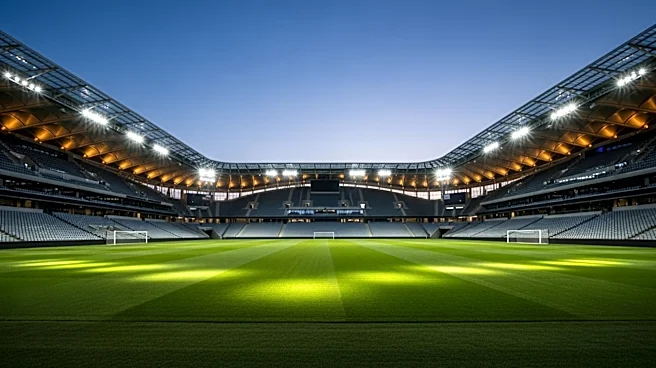






Westfalenstadion, also known as Signal Iduna Park, is not just the home of Borussia Dortmund; it is a central venue for major football events in Germany and Europe. With its large capacity and modern facilities, the stadium has hosted numerous significant matches, including World Cup games and European finals. This article delves into the stadium's role as a key location for high-profile football events, highlighting its importance in the sporting
world.
Hosting the FIFA World Cup
Westfalenstadion's journey as a major event venue began with the 1974 FIFA World Cup. The stadium was constructed specifically to host matches for this prestigious tournament, marking its entry into the international football scene. The decision to build the stadium in Dortmund was influenced by the reallocation of funds from Cologne, allowing the city to become a World Cup host.
The stadium's design and capacity were well-suited for the World Cup, accommodating thousands of fans from around the globe. This event set the stage for Westfalenstadion to become a regular host for international football competitions, establishing its reputation as a premier venue.
UEFA Cup Final and Other Major Matches
In addition to World Cup matches, Westfalenstadion has hosted other significant football events. One of the most notable was the UEFA Cup Final in 2001, further cementing its status as a top-tier stadium. The ability to host such high-profile matches is a testament to the stadium's facilities and its capacity to handle large crowds.
The stadium's classification as an elite venue by UEFA allows it to host the finals of major club competitions. This recognition underscores its importance in the European football landscape, attracting fans and teams from across the continent.
A Venue for Domestic and International Competitions
Westfalenstadion's role extends beyond international tournaments; it is also a key venue for domestic competitions. As the home of Borussia Dortmund, the stadium regularly hosts Bundesliga matches, drawing large crowds and creating an electrifying atmosphere. The stadium's capacity of 81,264 for domestic matches makes it the largest in Germany, providing a significant advantage for the home team.
For international matches, the capacity is slightly reduced to 65,590, but the stadium remains a formidable venue. Its ability to adapt to different types of events, from domestic league games to international tournaments, highlights its versatility and importance in the football world.
In conclusion, Westfalenstadion's role as a hub for major football events is undeniable. Its history of hosting significant matches and its status as an elite venue make it a cornerstone of both German and European football.