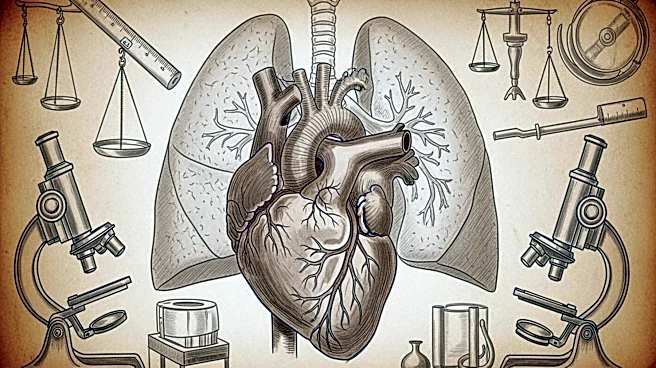










Physiology, the scientific study of functions and mechanisms in living systems, has a rich history that dates back to ancient times. This field has evolved significantly, influenced by various cultures and scientific advancements. Understanding its historical development provides insight into how physiology has become a cornerstone of modern biological sciences.
Ancient Beginnings
The roots of physiology can be traced back to classical Greece, where figures like Hippocrates
laid the groundwork for medical science. Hippocrates introduced the theory of humorism, which posited that the body was composed of four basic substances: earth, water, air, and fire. Each of these elements corresponded to a humor: black bile, phlegm, blood, and yellow bile. This theory was foundational in understanding the body's functions and was later expanded by Galen, who linked emotions to these humors.
In addition to Greece, early forms of physiology were present in other ancient cultures, such as China and India. These civilizations developed their own systems of understanding the human body and its functions, contributing to the global tapestry of physiological knowledge. The emphasis on the relationship between structure and function, as highlighted by Aristotle, marked a significant step in the evolution of physiology.
The Middle Ages and Renaissance
During the Middle Ages, Galenic physiology dominated medical thought. Galen's work, which included the use of experiments to understand bodily functions, remained influential for over a millennium. It wasn't until the Renaissance that significant advancements were made. Jean Fernel, a French physician, introduced the term "physiology" and helped shift the focus towards a more scientific approach.
The Renaissance also saw important discoveries in the circulation of blood, with figures like William Harvey playing a crucial role. Harvey's work laid the foundation for understanding the cardiovascular system, a key component of human physiology. This period was marked by a growing interest in experimentation and observation, setting the stage for modern physiological research.
Modern Developments
The 19th and 20th centuries witnessed rapid advancements in physiology, driven by technological innovations and a deeper understanding of biological processes. The cell theory, proposed by Matthias Schleiden and Theodor Schwann, revolutionized the field by establishing that all organisms are composed of cells. This discovery paved the way for modern cell physiology.
Claude Bernard's concept of the "milieu intérieur," later known as homeostasis, emphasized the body's ability to maintain a stable internal environment. This idea was further developed by Walter B. Cannon, who highlighted the importance of regulatory mechanisms in physiological processes. These concepts remain central to our understanding of physiology today.
The historical journey of physiology reflects a continuous quest for knowledge, driven by curiosity and scientific inquiry. From ancient theories to modern discoveries, the field has evolved into a vital discipline that underpins our understanding of life itself.