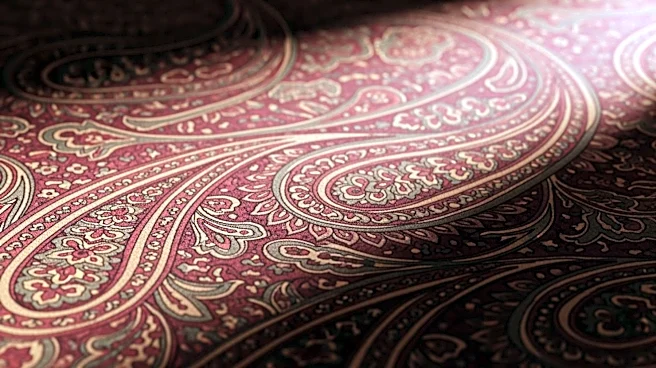







Paisley, a distinctive ornamental design, has a rich history that spans continents and centuries. Known for its teardrop-shaped motif with a curved upper end, the design has its roots in Iranian and Persian cultures. It gained popularity in the West during the 18th and 19th centuries, largely due to the import of Kashmir shawls from India. This article delves into the historical journey of the Paisley design, its cultural significance, and its enduring
appeal.
Origins and Early Popularity
The Paisley design, also known as the boteh or buta, originated in Iran and Persia. It is characterized by its teardrop shape, which some experts believe symbolizes the sun, a phoenix, or an ancient religious sign for an eagle. The design was traditionally woven onto silk clothing using silver and gold materials, signifying elite status and often adorning royal objects.
In the 1400s, the design made its way to Kashmir, where it became a popular motif on shawls. These Kashmir shawls were highly sought after and became a symbol of luxury and status. The design's journey from Persia to Kashmir marked the beginning of its global spread, setting the stage for its introduction to Western cultures.
The Paisley Design in the West
The British East India Company played a crucial role in introducing the Paisley design to the West. In the 18th and 19th centuries, they imported Kashmir shawls to England and Scotland, where the design quickly became fashionable. The town of Paisley in Scotland, a major textile center, began replicating the design using jacquard looms, which allowed for more intricate patterns.
Paisley weavers became renowned for their ability to produce shawls with multiple colors, a feat that set them apart from other weavers who typically used only two colors. By 1860, Paisley could produce shawls with up to 15 colors, although this was still fewer than the multicolored shawls imported from Kashmir. The design's popularity soared, and it became known as the Paisley pattern in English-speaking cultures.
Modern Use and Cultural Impact
The Paisley design experienced a revival in the 1960s, coinciding with a growing interest in Eastern cultures in the United States. It became a symbol of the psychedelic style, embraced by popular musicians like The Beatles and David Bowie. Today, the design remains prevalent in fashion, appearing on clothing, accessories, and home furnishings.
The Paisley pattern's influence extends beyond fashion, impacting music, architecture, and even sports. Its enduring appeal lies in its versatility and rich cultural history, making it a timeless design that continues to captivate people around the world.