






Tongs are a simple yet essential tool used for gripping and lifting objects, often too hot to handle with bare hands. Their history is rich and varied, stretching back thousands of years. This article explores the evolution of tongs, from their earliest forms in ancient Egypt to the diverse designs found in modern kitchens.
Ancient Beginnings
The use of tongs can be traced back to ancient Egypt, where they were employed to handle hot objects. The earliest tongs were likely
made of wood, a material readily available and easy to shape. As technology advanced, bronze became the material of choice, with evidence of bronze tongs dating back to 3000 BC. An Egyptian wall painting from 1450 BCE depicts a crucible supported between two metal bars, illustrating the use of tongs in metalworking.
The significance of tongs in ancient cultures is further highlighted by a myth from the classical Jewish text Pirkei Avot. According to this myth, the first pair of tongs was created by God after resting on the seventh day of creation. This story underscores the importance of tongs in early human civilization, as they were essential for blacksmiths to create new pairs of tongs.
Design Variations
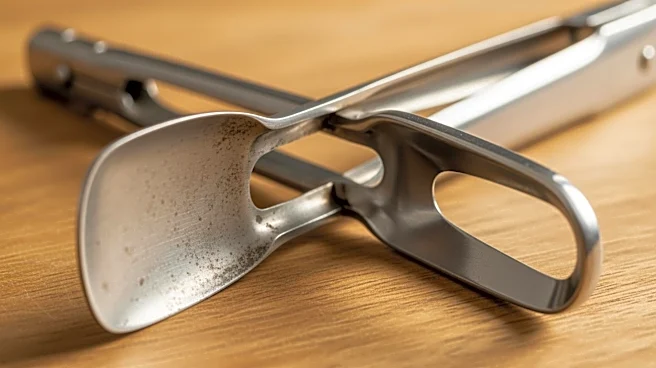
Over time, tongs have evolved to suit various purposes, leading to a wide array of designs. Modern tongs are often equipped with silicone tips to withstand high temperatures, making them ideal for cooking. Long-handled locking tongs are popular for outdoor grilling, providing a safe way to handle hot food over an open flame.
In addition to their practical uses, tongs have also been designed with aesthetics in mind. Some tongs feature resting points to prevent the working end from touching surfaces, maintaining cleanliness and hygiene. The diversity in design reflects the adaptability of tongs to meet specific needs, whether in the kitchen or in industrial settings.
Cultural Impact
Tongs have not only been a practical tool but also a cultural symbol. In some regions, tongs are featured in coat of arms, representing strength and craftsmanship. Their presence in historical art and mythology highlights their role in human development and technological advancement.
Today, tongs continue to be an indispensable tool in households and industries worldwide. Their evolution from simple wooden implements to sophisticated kitchen gadgets demonstrates the ingenuity of human design and the enduring importance of this humble tool.