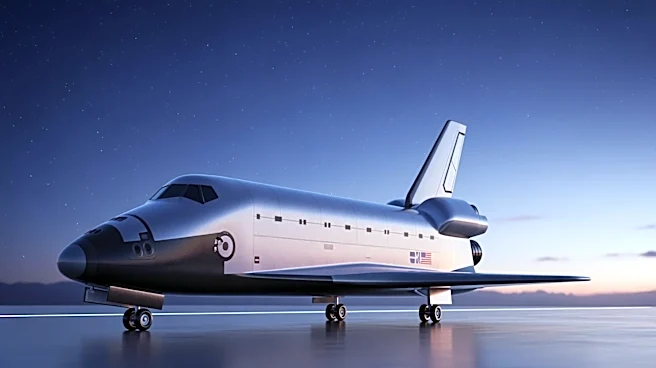

The maiden flight of the Space Shuttle Endeavour, designated STS-49, marked a significant milestone in NASA's space exploration history. Launched on May 7, 1992, this mission was primarily aimed at retrieving
and relaunching the Intelsat VI satellite, which had failed to reach its intended orbit two years earlier. The mission not only showcased the capabilities of the newly built shuttle but also set records in spacewalk duration and complexity.
Mission Objectives and Challenges
The primary goal of STS-49 was to capture the stranded Intelsat VI satellite, attach it to a new upper stage, and relaunch it to its intended geosynchronous orbit. This task was fraught with challenges, as the satellite had been stuck in a low Earth orbit since its launch aboard a Commercial Titan III vehicle in March 1990. The mission required precise maneuvering and coordination among the crew members to successfully capture and reposition the satellite.
The capture operation was initially planned to be executed by astronauts Pierre Thuot and Richard Hieb during an extravehicular activity (EVA). However, the complexity of the task led to multiple attempts, including an unscheduled but successful hand capture by Thuot, Hieb, and Thomas Akers. This marked the first and only three-person EVA in space flight history, highlighting the mission's unique challenges and the crew's adaptability.
Record-Breaking Spacewalks
STS-49 set several records in the realm of spacewalks. The mission featured four EVAs, with the third EVA lasting 8 hours and 29 minutes, making it the longest U.S. spacewalk at the time. This record stood until STS-102 in 2001. The fourth EVA, conducted by astronauts Kathryn Thornton and Thomas Akers, lasted 7 hours and 45 minutes, further demonstrating the endurance and skill of the crew.
These spacewalks were crucial for the successful completion of the mission objectives, including the assembly of the Assembly of Station by EVA Methods (ASEM) structure in the cargo bay. This structure served as a platform to aid in the hand capture and subsequent attachment of the capture bar to the Intelsat VI satellite.
Legacy and Impact
The STS-49 mission was not only a technical success but also a testament to the capabilities of the Space Shuttle Endeavour and its crew. It demonstrated NASA's ability to conduct complex satellite retrieval and repair operations, paving the way for future missions involving satellite servicing and space station assembly.
The mission's success also underscored the importance of teamwork and innovation in overcoming unforeseen challenges in space exploration. The records set during STS-49 highlighted the potential for extended EVAs, which would become increasingly important in subsequent missions involving the International Space Station.
Overall, STS-49 was a landmark mission that showcased the versatility and resilience of the Space Shuttle program, setting the stage for future advancements in space technology and exploration.