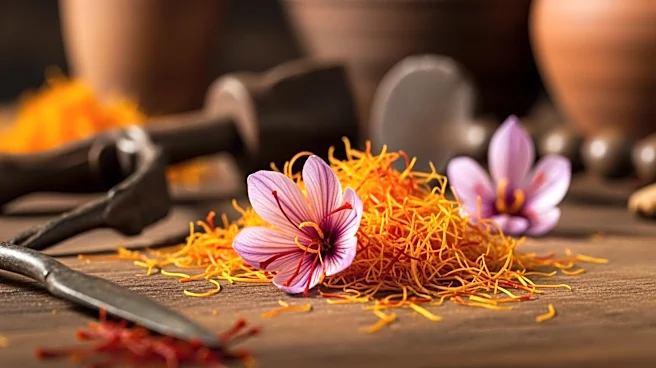







Saffron, a spice derived from the Crocus sativus flower, has a rich history that spans over 3,500 years. Known for its vivid crimson stigmas, saffron has been cultivated and traded across continents, becoming one of the world's most expensive spices. This article explores the historical journey of saffron, from its origins in ancient civilizations to its modern-day applications.
Ancient Origins and Cultivation
The domestication of saffron is believed to have originated in the southern
part of mainland Greece, where selective breeding of Crocus cartwrightianus led to the development of Crocus sativus. This sterile triploid plant, incapable of sexual reproduction, relies on human propagation for its cultivation. Historical records suggest that saffron was first documented in a 7th-century BC Assyrian botanical reference, indicating its early use and trade.
Saffron's cultivation spread throughout much of Eurasia, reaching parts of North Africa, North America, and Oceania. The spice was highly valued for its bitter taste, hay-like fragrance, and slight metallic notes, making it a sought-after commodity in ancient trade routes. Various wild species of Crocus were harvested for saffron, including Crocus ancyrensis in Turkey and Crocus thomasii in Italy.
Saffron in the Middle Ages
During the Middle Ages, saffron demand skyrocketed, particularly during the Black Death of 1347-1350, when it was coveted for its medicinal properties. The spice was imported in large quantities to Europe, as many farmers capable of growing it had died off. Saffron became a contested commodity, leading to the fourteen-week-long "Saffron War" when a shipment was hijacked by nobles.
Despite the challenges, saffron cultivation persisted in Europe, with regions like Basel and Nuremberg becoming central to its trade. The spice was used in various applications, from culinary dishes to medicinal treatments, and was often associated with wealth and status.
Modern-Day Applications
Today, saffron continues to be a valuable spice, used in cuisines worldwide for its unique flavor and color. Iran is the largest producer, accounting for around 90% of global production. Saffron is used in traditional medicine, dyeing, perfumery, and religious rituals, showcasing its versatility and enduring appeal.
The cultivation of saffron has spread to new regions, including Afghanistan, where it is promoted as an alternative to opium production. The spice's high retail value is maintained through labor-intensive harvesting methods, requiring thousands of hand-picked stigmas per kilogram.
Saffron's historical journey reflects its significance across cultures and eras, from ancient Greece to modern-day applications. Its enduring appeal and high value continue to make it a prized commodity in global trade.