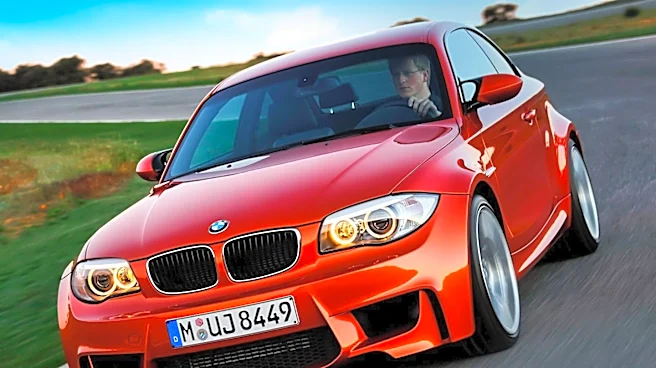






The BMW 1 Series has been a significant player in the subcompact executive car segment since its launch in 2004. As a global model, it has been adapted to meet the needs of different markets, with variations in design, features, and production strategies. This article explores the regional variations and market strategies that have shaped the BMW 1 Series' presence worldwide.
Tailoring to Regional Preferences
The BMW 1 Series has been tailored to suit the preferences and requirements
of various markets. In its first generation, the 1 Series was available in multiple body styles, including hatchback, coupé, and convertible, catering to diverse consumer tastes. However, since 2014, the coupé and convertible models have been marketed separately as the 2 Series, allowing the 1 Series to focus on the hatchback segment.
In 2017, BMW introduced a four-door sedan version of the 1 Series, specifically for the Chinese market. This model, known as the F52, was developed in collaboration with BMW Brilliance, a joint venture between BMW and Brilliance Auto. The F52 sedan uses a front-wheel-drive platform, aligning with local market preferences and offering a practical option for Chinese consumers.
Production and Assembly
The production and assembly of the BMW 1 Series have been strategically distributed across various locations to optimize efficiency and meet regional demands. The first and second generations were primarily produced in Germany, with assembly plants in Leipzig and Regensburg. However, to cater to the growing demand in emerging markets, BMW expanded its production footprint.
In China, the F52 sedan is produced by BMW Brilliance, highlighting the importance of the Chinese market for BMW. Additionally, the F52 was later introduced in Mexico, further expanding its reach. The third generation (F40) and fourth generation (F70) continue to be produced in Germany, maintaining BMW's commitment to quality and precision engineering.
Market Strategies and Adaptations
BMW has employed various market strategies to ensure the success of the 1 Series in different regions. In Europe, the 1 Series has been positioned as an entry-level luxury vehicle, appealing to young professionals and urban drivers seeking a premium driving experience. The introduction of turbocharged engines and advanced technology features has further enhanced its appeal.
In contrast, the Chinese market has seen a focus on practicality and affordability, with the introduction of the F52 sedan. This model offers a spacious interior and modern features, catering to the preferences of Chinese consumers. By adapting its offerings to meet regional demands, BMW has successfully maintained the 1 Series' relevance in the global market.
The BMW 1 Series' ability to adapt to different markets and consumer preferences has been key to its success. As it continues to evolve, the 1 Series remains a versatile and popular choice for drivers worldwide, reflecting BMW's commitment to innovation and customer satisfaction.