





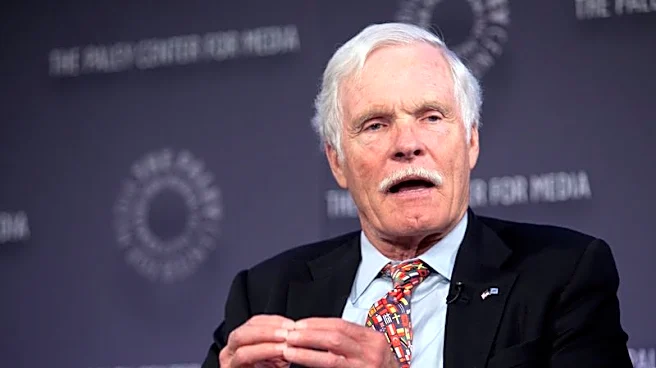

Newton Minow, the chairman of the Federal Communications Commission in the early 1960s, is best known for his "Vast Wasteland" speech, which criticized the state of American television. However, Minow's vision extended beyond criticism; he was a strong advocate for the development of educational television. His efforts laid the foundation for what would become the Public Broadcasting Service (PBS) and significantly influenced the landscape of public
broadcasting in the United States.
Advocacy for Educational Content
In his 1961 speech, Minow emphasized the need for television to serve the public interest by providing educational and culturally enriching content. He believed that television had the potential to be a powerful educational tool, capable of expanding viewers' horizons and stimulating intellectual growth. Minow argued that broadcasters had a responsibility to offer programming that went beyond mere entertainment and contributed to the advancement of education and culture.
Minow's advocacy for educational television was rooted in his belief that media should play a role in improving society. He saw television as a means to educate the public on important issues and provide access to cultural experiences that might otherwise be unavailable. This vision was a driving force behind his push for higher standards in television programming.
The Birth of Public Broadcasting
Minow's efforts to promote educational television were instrumental in the development of non-commercial educational television stations. These stations, which would later form the backbone of PBS, were designed to provide educational content without the commercial pressures faced by traditional networks. Minow's vision for public broadcasting was to create a space where educational and cultural programming could thrive, free from the constraints of commercial interests.
The establishment of PBS in 1970 was a direct result of the groundwork laid by Minow and others who shared his vision. PBS became a platform for high-quality educational programming, offering shows like "Sesame Street" and "Mister Rogers' Neighborhood," which have had a lasting impact on generations of viewers.
Lasting Influence
Newton Minow's vision for educational television has had a lasting influence on the media landscape. His advocacy for public broadcasting helped create a space for educational content that continues to enrich the lives of viewers today. Minow's belief in the power of television as an educational tool remains relevant as new media platforms emerge, offering new opportunities to educate and inform the public.
In summary, Minow's contributions to educational television have left an indelible mark on public broadcasting. His vision for a media landscape that prioritizes education and culture continues to inspire efforts to improve the quality and impact of television programming.