


Continuously variable transmissions (CVTs) are a type of automatic transmission that offer a seamless driving experience by providing an infinite range of gear ratios. Unlike traditional automatic transmissions that shift between a set number of gears, CVTs adjust continuously, allowing the engine to operate at its most efficient speed. This article explores how CVTs work, their benefits, and their applications in various vehicles.
How CVTs Work
A CVT operates by
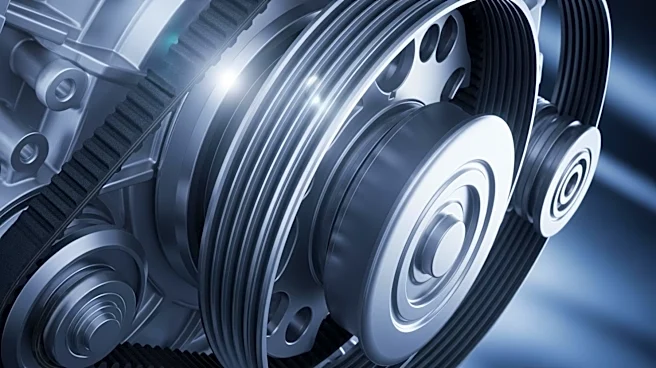
using a system of pulleys and a belt or chain to vary the gear ratio. The most common type of CVT uses two variable-diameter pulleys connected by a V-belt. Each pulley consists of two cone-shaped halves that move together and apart. The V-belt runs between these halves, and the effective diameter of the pulley changes as the halves move. This change in diameter adjusts the gear ratio, allowing for a smooth transition between speeds.
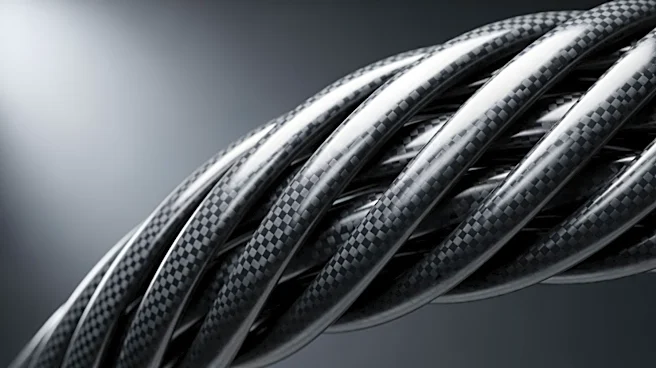
In a belt-driven CVT, the pulleys must be adjusted simultaneously to maintain the proper tension on the belt. This is often achieved using a combination of a centrifugal drive pulley and a spring-loaded driven pulley. The belt's stiffness is crucial, as it must be able to make short radial movements while sliding in and out of the pulleys. For higher torque applications, such as in automobiles, a chain is used instead of a belt.
Benefits of CVTs
One of the primary benefits of CVTs is their ability to improve fuel economy. By allowing the engine to run at its most efficient speed regardless of the vehicle's speed, CVTs can reduce fuel consumption compared to traditional automatic transmissions. This makes them an environmentally friendly option for gasoline-powered vehicles.
CVTs also offer a smoother driving experience. Since there are no distinct gear shifts, the transition between speeds is seamless, providing a more comfortable ride. Additionally, the simpler structure of a CVT can lead to a longer lifespan for internal components and potentially greater durability.
Applications of CVTs
CVTs are used in a wide range of vehicles, from cars and motorcycles to tractors and snowmobiles. In passenger vehicles, they are often marketed under various brand names, such as "Lineartronic" by Subaru and "Xtronic" by Nissan. CVTs are also popular in small vehicles like motor scooters and golf carts, where their mechanical simplicity and ease of use are advantageous.
In the agricultural and construction industries, CVTs are used in equipment like combine harvesters and small tractors. These applications benefit from the CVT's ability to adjust the forward speed independently of the engine speed, allowing operators to adapt to varying conditions without sacrificing efficiency.
Overall, CVTs offer a versatile and efficient transmission option for a variety of vehicles, providing benefits in fuel economy, driving comfort, and operational efficiency.