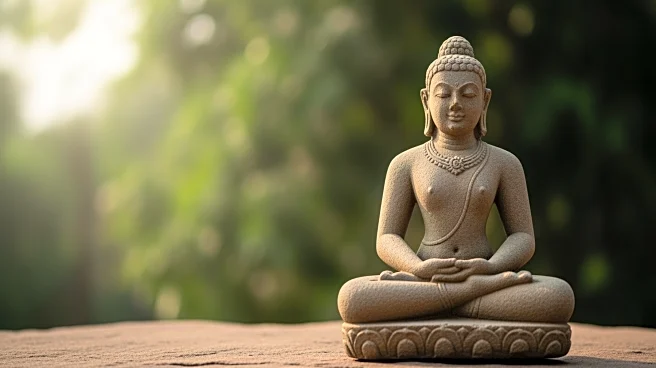




Postural yoga, a practice that has become synonymous with physical fitness and wellness, has a rich history rooted in India. Originally a meditational practice, yoga has undergone significant transformations over the centuries. This article explores the evolution of postural yoga in India, from its ancient origins to its modern-day form, highlighting key figures and influences that have shaped its development.
Ancient and Medieval Beginnings
Yoga's origins can be traced back to ancient
India, where it was primarily a spiritual and meditational practice. The Yoga Sutras of Patanjali, a classical text on yoga, mentions asanas, or postures, only briefly, focusing instead on meditation. During the medieval period, Hatha yoga emerged, incorporating a small number of physical postures alongside techniques like pranayama and mudras. However, by the 20th century, Hatha yoga was nearly extinct, viewed with disdain by both the British Raj and mainstream Hindu society.
The revival of yoga in the early 20th century was driven by Indian nationalism. Figures like Yogendra and Kuvalayananda began to promote yoga as a means of achieving physical well-being, emphasizing its health benefits over its spiritual aspects. This shift in focus helped to make yoga more acceptable and accessible to a broader audience.
The Influence of Krishnamacharya
A pivotal figure in the development of modern postural yoga was Krishnamacharya, often referred to as the "father of modern yoga." In the 1930s, he developed a dynamic style of yoga that incorporated elements of gymnastics, creating a vigorous form of postural yoga. His approach included transitions, or vinyasas, that allowed practitioners to flow smoothly from one pose to another.
Krishnamacharya's influence extended beyond India, as his students, including K. Pattabhi Jois and B. K. S. Iyengar, brought yoga to the West. They established their own schools and further developed the practice, contributing to the global spread of yoga as a form of physical exercise.
Yoga's Global Journey and Return to India
As yoga gained popularity in the West, it underwent further transformations, becoming less spiritual and more focused on physical fitness. This Westernized version of yoga eventually returned to India, where it was embraced alongside traditional forms. The "pizza effect," a term used to describe cultural elements that return to their place of origin after being transformed abroad, aptly describes this phenomenon.
In recent years, yoga has been celebrated in India with events like the International Day of Yoga, initiated by Prime Minister Narendra Modi in 2015. This annual event highlights yoga's significance as a cultural and national symbol, showcasing its enduring legacy and continued evolution.
The journey of postural yoga in India is a testament to its adaptability and resilience. From its ancient roots to its modern-day practice, yoga has continually evolved, influenced by cultural, social, and political factors, while maintaining its core principles of health and well-being.